Flexible Flight Booking Options: A Strategic Guide to 2026 Travel
The contemporary landscape of aviation procurement has undergone a fundamental shift from rigid, transactional exchanges toward a more fluid, risk-mitigated environment. In an era defined by global supply chain volatility, shifting geopolitical boundaries, and unpredictable climate patterns, the ability to pivot an itinerary is no longer a luxury; it is a strategic necessity. For the sophisticated traveler or corporate procurement officer, the concept of flexibility has evolved beyond simple “refundability” into a complex suite of contractual rights, technological workarounds, and logistical redundancies.
Navigating this environment requires a departure from the “lowest-fare-first” mentality that has dominated the digital travel space for the last two decades. The democratization of flight data initially favored price transparency, but this led to a “race to the bottom” where the most affordable seats were stripped of all utility, leaving travelers stranded during disruption events. As airlines move toward more sophisticated yield management models, the “flexibility” of a ticket is now a carefully priced commodity, unbundled and sold back to the consumer through a dense thicket of fare families and ancillary options.
To truly master this domain, one must look beneath the user interface of booking platforms to understand the underlying mechanics of “Fare Rules” and “Change Waivers.” This editorial exploration deconstructs the systemic logic of the aviation marketplace, providing a definitive framework for evaluating the true value of adaptable travel. By treating air travel as a dynamic asset rather than a static expense, this resource serves as a cornerstone for those who require operational continuity and fiscal resilience in an increasingly volatile global sky.
Understanding “flexible flight booking options.”

To articulate the value of flexible flight booking options, we must first dismantle the binary myth of “refundable vs. non-refundable.” In professional logistics, flexibility is a spectrum of utility. It encompasses the right to change dates without penalty, the ability to cancel for a travel credit, the option to transfer a ticket to another individual, and the priority re-accommodation rights during “Irregular Operations” (IROPS). The common error is to view flexibility only through the lens of a “plan change,” when its most critical function is often “risk mitigation” against events outside the traveler’s control.
Multi-Perspective Utility
From a technical perspective, flexibility is a function of the “Fare Bucket,” the letter code (e.g., Y, B, M) assigned to a seat that dictates the underlying contract. From a strategic perspective, it is about “Liquidity.” A flexible ticket is a liquid asset that can be converted back into capital or time. Oversimplifying this as a simple “add-on” at checkout ignores the “Path Dependency” of the booking: a ticket booked through a third-party aggregator may be technically flexible according to the airline, but functionally rigid because the intermediary’s call center is unreachable during a crisis.
The Problem of “Soft” vs. “Hard” Flexibility
“Hard” flexibility is written into the ticket’s fare rules;s it is a contractual certainty. “Soft” flexibility relies on carrier policy, such as the 24-hour “cooling-off” period mandated by certain regulators (like the US DOT) or the discretionary waivers issued during major storms. A high-tier travel plan relies on “Hard” flexibility, ensuring that the traveler is never dependent on the “mercy” of an airline’s customer service desk.
Contextual Background: The Death and Rebirth of Fluidity
The evolution of flight flexibility follows a cyclical pattern of deregulation and technical innovation. In the “Legacy Era” (1970s–1990s), almost all tickets were inherently flexible because the high cost of airfare included a “service premium.” Change fees were rare, and interlining, moving a passenger to a competitor’s flight during a delay, was a standard industry protocol.
The “Efficiency Era” (2000s–2015) saw the rise of the Low-Cost Carrier (LCC) model, which pioneered the “Use it or Lose it” philosophy. This forced legacy carriers to “unbundle” their products, creating the “Basic Economy” class of fare designed specifically to be as rigid as possible to protect the airline’s yield. Flexibility became a luxury, often priced at a 200% to 300% premium over the base fare.
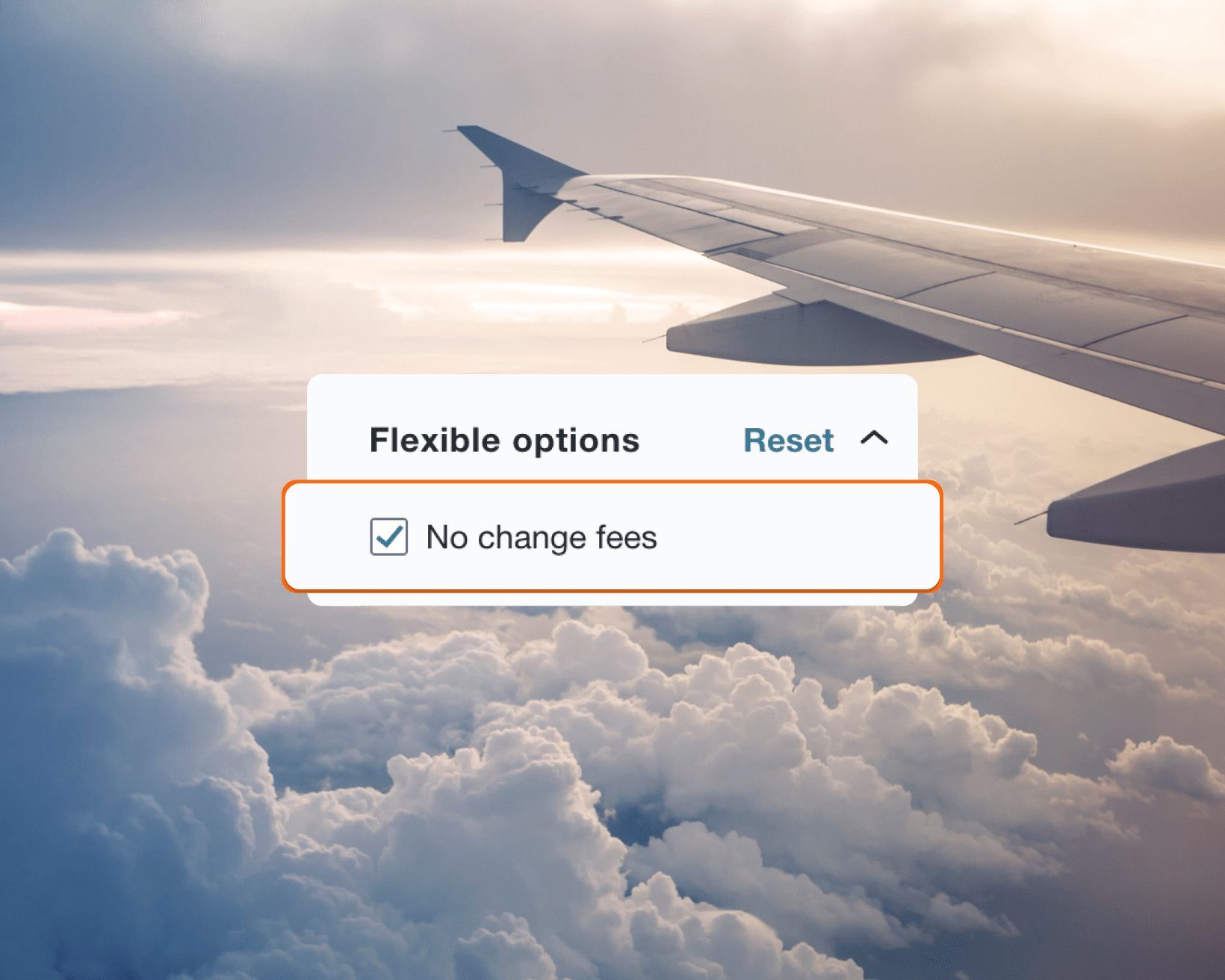
We have now entered the “Volatility Era.” The massive disruptions of the early 2020s forced a systemic re-evaluation of risk. Airlines realized that extreme rigidity inhibited demand, leading to the permanent removal of change fees on many “Main Cabin” fares across major global carriers. However, this “new flexibility” is often conditional, returning value in the form of “Travel Credits” rather than cash, creating a “Closed Ecosystem” that keeps the traveler’s capital within the airline’s ledger.
Conceptual Frameworks and Mental Models
To evaluate the strength of an adaptable itinerary, professionals apply several rigorous mental models.
1. The “Volatility Buffer” Model
This framework posits that flexibility is an insurance policy against “Event Risk.”
-
The Logic: If the probability of a meeting cancellation is 20%, and the cost of a flexible ticket is $200 more than a rigid one, the traveler must determine if $200 is a fair “premium” to protect the $1,000 “base” investment.
-
The Limit: This model fails when the “premium” exceeds the “expected loss,” which often happens on short-haul, low-value routes.
2. The “Recovery Velocity” Framework
This model prioritizes the speed at which an itinerary can be repaired.
-
The Logic: Flexibility is not just about changing a date; it is about who “owns” the ticket. A direct-booked ticket has the highest “Recovery Velocity” because the airline can modify it instantly at the gate. A third-party ticket has low velocity because it requires a “hand-off” between systems.
-
The Limit: High-velocity options are usually more expensive and exclude certain “aggregator-only” deals.
3. The “Asset Liquidity” Model
This treats a travel booking as a store of value.
-
The Logic: A refundable ticket is “Cash-Equivalent.” A credit-only ticket is “Restricted Equity.” A rigid ticket is “Sunk Cost.” A top-tier strategy maximizes “Cash-Equivalency” for mission-critical travel.
-
The Limit: Maintaining total liquidity across all travel can lead to a significant “Opportunity Cost” in terms of unspent capital.
Key Categories and Operational Typologies
Identifying the right flexible flight booking options involves matching the “Mission Profile” to the appropriate “Capability Tier.”
| Category | Primary Strategic Focus | Best Use Case | Critical Trade-off |
| Full Refundable (Y/J/F) | Capital Protection | High-stakes negotiations; high-net-worth travel. | Extreme upfront cost; often 3x-5x the base rate. |
| “Main Cabin” (No-Fee Change) | Schedule Adaptation | Standard business or family travel. | Refunds are issued as “Credits,” not cash. |
| Ancillary “Flex” Add-ons | Budget Elasticity | Low-cost carrier (LCC) flights: The fee | The fee is non-refundable even if you don’t use the flex. |
| Same-Day Standby/Change | Tactical Efficiency | High-frequency corridors (e.g., NYC-LON). | Subject to seat availability; requires status. |
| 24-Hour Regulatory Void | Short-Term Pivot | Correcting booking errors or “Price-Watching.” | Very limited window; usually requires 7+ days lead time. |
| Interline/Partner Flex | Global Resilience | Complex international multi-leg itineraries. | Requires booking on a “Primary Carrier” ticket stock. |
Detailed Real-World Scenarios and Decision Logic
The “Meeting Drift”
A traveler has a 4-day conference. The closing keynote might be moved to the final morning, or the traveler might need to stay an extra day for a follow-up.
-
Decision Logic: Book a “Main Cabin” fare on a carrier with high frequency on that route.
-
Outcome: Even if the fare is not “refundable,” the “No-Fee Change” allows the traveler to push the return flight by 24 hours, paying only the fare difference, which is often negligible on high-volume routes.
The Weather Cascade
A massive winter storm is predicted for a major hub (e.g., O’Hare) on the day of transit.
-
Decision Logic: Proactively use the “Flexible Change” option to re-route through a southern hub (e.g., Dallas) 48 hours before the airline issues a formal waiver.
-
Second-Order Effect: By acting before the mass-cancellation event, the traveler secures the last available seats on the alternate route, while those on “Rigid” tickets wait for the airline to “force” a re-booking.
Planning, Cost, and Resource Dynamics
The economics of flexibility are governed by “Fare Laddering.” As you move up the ladder, the “Flexibility Premium” increases, but the “Risk of Loss” decreases.
| Flexibility Tier | Cost Range (vs Base) | Primary Value Driver |
| Basic Economy | 0% (Baseline) | Pure price discovery. |
| Standard/Main | +15% to +30% | “No Change Fee” peace of mind. |
| Premium/Business | +50% to +150% | Refundability + Comfort. |
| Full Flex (Y) | +200% to +400% | Total capital liquidity. |
Resource Variability: In highly competitive markets (London to New York), the cost of flexibility is lower because carriers use it as a “Service Differentiator.” In monopolistic markets (small regional airports), flexibility is priced as a “Punitive Premium.”
Tools, Strategies, and Support Systems
To effectively manage flexible flight booking options, one must utilize a “Tech Stack” that counters the airlines’ yield algorithms:
-
Fare Rule Interpreters: Professional tools (like ExpertFlyer) that show the exact text of the “Penalties” section of a fare.
-
GDS-Direct Portals: Avoiding “Opaque” OTAs that add their own service fees on top of the airline’s change fees.
-
Automatic Price-Drop Protection: Tools that monitor your specific route and alert you if a “Flexible” seat drops to the price of a “Standard” seat.
-
Credit Card “Travel Protection” Audits: Understanding which cards provide “Cancel for Any Reason” (CFAR) secondary coverage.
-
Multi-Channel Status Tracking: Leveraging elite status to “bypass” change fees even on theoretically rigid fares.
-
“Waitlist” Management Systems: For travelers on flexible fares to automatically “jump” to an earlier flight if a seat opens up.
Risk Landscape and Failure Modes
Flexibility is not a “Silver Bullet”; it has its own taxonomy of failure.
-
The “Credit Trap”: A traveler cancels a $1,000 flight and receives a credit. The credit expires in 12 months. If the traveler doesn’t fly that specific airline again, the “Flexible” option resulted in a 100% loss of capital.
-
The “Fare Difference” Illusion: A “No Change Fee” policy does not mean a “Free Change.” If the new flight is $300 more expensive, the traveler must still pay that gap. During a crisis, fare differences can skyrocket, making the “Flexible” ticket functionally unusable for a budget-constrained traveler.
-
The “Agent-of-Record” Block: A traveler buys a flexible ticket through a corporate travel portal. During a weekend delay, the airline refuses to touch the ticket, stating the “Travel Agent” must make the change. The agency is closed until Monday.
Governance, Maintenance, and Long-Term Adaptation
A robust travel strategy requires a “Feedback Loop” to ensure flexibility isn’t being purchased needlessly.
-
The Quarterly Audit: Review the last 10 trips. How many times was a “Flexible” feature actually utilized? If the answer is zero, the organization is over-insuring.
-
The “Waiver Monitor”: Maintaining a real-time feed of “Global Travel Waivers” to identify when “Soft” flexibility might make a “Rigid” ticket adaptable for free.
-
Status Maintenance: Recognizing that the highest level of flexibility comes from “Status-Based Waivers.” Maintaining mid-tier status is often cheaper than buying “Full Flex” tickets on every trip.
Measurement, Tracking, and Evaluation
How do we quantify the “Return on Flexibility”?
-
Effective Fare (EF): (Total Spent on Flexible Tickets – Total Value of Recovered Credits) / Total Trips.
-
Disruption Resolution Time (DRT): The minutes from a schedule change to a confirmed new itinerary.
-
Capital Liquidity Ratio: Percentage of the annual travel budget that is “Cash-Refundable” vs. “Credit-Locked.”
-
Documentation Examples: Maintaining a “Credit Ledger” to track expiration dates and a “Change History” log to identify routes with the highest volatility.
Common Misconceptions and Oversimplifications
-
Myth: “All ‘Main Cabin’ fares are now flexible.”
Correction: Many international routes still have rigid change fees; “No Fee” is largely a North American domestic standard. -
Myth: “Travel insurance is the same as a flexible ticket.”
Correction: Insurance requires a “Named Peril” (e.g., illness). A flexible ticket allows you to change your mind because you “just don’t feel like going.” -
Myth: “Refundable means you get your money back instantly.”
Correction: Airline refund cycles can take 7 to 30 days to hit a credit card statement. -
Myth: “You can’t change a ‘Basic Economy’ ticket even for a fee.”
Correction: Some carriers have recently introduced a “Buy-Up” option to move a Basic ticket into a flexible bucket after purchase. -
Myth: “Flexibility applies to the whole trip.”
Correction: Often, if you use the “Departure” leg, the “Return” leg becomes much harder to change due to “Re-pricing” rules.
Conclusion
The pursuit of flexible flight booking options is an admission of the unpredictable nature of modern life. It is a strategic pivot from the “Efficiency of the Known” to the “Resilience of the Unknown.” As we have seen, the most effective strategies are those that treat flexibility as a multi-layered system combining contractual fare rules, direct booking authority, and technical monitoring tools. In an increasingly algorithmic aviation marketplace, the traveler’s primary defense is not a lower price, but a wider exit. By applying the mental models of Asset Liquidity and Recovery Velocity, one can ensure that every journey is an adaptable asset, resilient to the inevitable shifts of the global sky.