Flight Booking Planning Tips: A Strategic 2026 Logistics Guide
The structural orchestration of global aviation has transitioned from a stable network of legacy carriers into a hyper-dynamic ecosystem defined by algorithmic pricing, shifting geopolitical corridors, and fragmented distribution standards. For the modern traveler or corporate strategist, securing passage across international borders is no longer a matter of simple ticket procurement. It has become an exercise in logistical resilience, requiring a sophisticated understanding of the “invisible” mechanics that govern the sky from the technical transition of New Distribution Capability (NDC) to the biological impact of ultra-long-haul transit.
Navigating this environment demands a departure from the “lowest-fare” heuristic that has dominated consumer behavior for the last two decades. While digital transparency initially favored the traveler, it eventually led to a “race to the bottom” where the most affordable seats were stripped of all utility, leaving passengers vulnerable during mass disruption events. To secure a successful journey, one must now analyze the “Total Cost of Arrival,” a metric that accounts for connection risk, document compliance, and the recovery velocity of the chosen booking channel.
This editorial exploration provides a rigorous foundation for understanding and executing high-tier global transit. By deconstructing the systemic evolution of airline revenue management and the conceptual frameworks of connective logistics, this resource establishes a benchmark for professional-grade travel planning. This is not merely a collection of travel tips; it is a definitive reference designed to transform a passive transaction into a strategic asset, ensuring operational continuity in an increasingly volatile global environment.
Understanding “flight booking planning tips.”
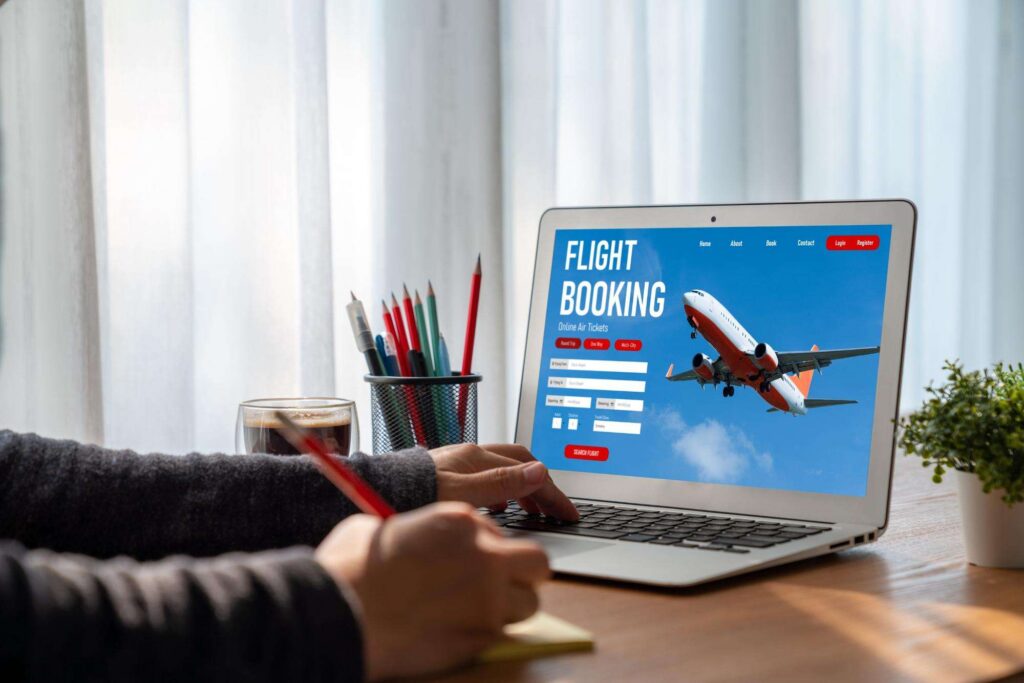
To properly engage with professional flight booking planning tips, one must first recognize that a “booking” is not a static purchase but a dynamic contractual agreement. In a professional editorial context, these tips represent a methodology for borderless transit that optimizes three critical variables: certainty of arrival, physical preservation, and fiscal efficiency. The common misunderstanding is to view flight planning as a linear event, a simple search for point A to point B, when in reality, it is a multi-link chain where the failure of a single node can invalidate the entire mission.
Multi-Perspective Analysis
A rigorous evaluation of these systems requires looking through three distinct lenses:
-
The Technical Lens: Evaluates the “Path Dependency” of the Passenger Name Record (PNR). Does the booking originate in a legacy Global Distribution System (GDS) or a modern direct-connect API? This determines who “owns” the data during an emergency.
-
The Financial Lens: Focuses on “Capital Preservation.” A non-refundable booking is a sunk cost; a flexible one is a liquid asset. Analyzing various procurement paths reveals how organizations balance these two states.
-
The Operational Lens: Assesses “Friction Reduction.” For a group or a high-stakes traveler, the “best” booking is the one that minimizes the cognitive load of transfers and security checkpoints.
The Risk of Oversimplification
Many travelers oversimplify the process as a choice between “Direct” and “Third-Party.” However, this ignores the “Hybrid Model,” where meta-search engines aggregate data but hand off the transaction to a specialized agent. True authority in this space requires a deconstruction of “The Off, er,” analyzing the fare bucket, the carrier’s historical On-Time Performance (OTP), and the contractual “Fare Rules” that dictate the change penalties.
Contextual Background: The Evolution of Global Distribution
The architecture of aviation distribution has moved through three distinct epochs. The Legacy Era (1970s–1990s) was dominated by the “Monolithic GDS.” Airlines pushed their inventory to a few central systems used by human travel agents. Pricing was static and transparent for the industry, though opaque for the consumer.
The Democratization Era (2000s–2015) saw the rise of the Online Travel Agency (OTA) and the metasearch engine. This period empowered the consumer but led to the “Commoditization of the Seat.” Airlines responded by “unbundling” their products, leading to the creation of Basic Econ,omy a fare class designed to be as rigid as possible to protect the carrier’s yield.
We are currently in the Retailing Era (2016–Present). This epoch is defined by NDC technology, which allows airlines to deliver rich, personalized bundles directly to specific channels. This has resulted in “Content Fragmentation.” If you compare different itineraries today, you will find that the same seat can have different price points and baggage rules depending on whether you are looking at a corporate portal, a direct airline site, or a legacy GDS display.
Conceptual Frameworks and Mental Models
To evaluate the strength of a travel strategy, professionals apply several rigorous mental models.
1. The “Total Cost of Ownership” (TCO) Model
This framework posits that the airfare is merely the “acquisition cost.”
-
The Logic: A $300 flight that requires a 6-hour layover in a weather-prone hub involves hidden costs in lost productivity, meals, and potential hotel stays.
-
The Limit: TCO is difficult to calculate for multi-leg journeys where “Connective Risk” is high.
2. The “Recovery Velocity” Framework
This model prioritizes the speed at which a traveler can be rerouted after a cancellation.
-
The Logic: A direct booking with a Tier-1 carrier has the highest recovery velocity. An “opaque” third-party booking has the lowest, as the airline may refuse to touch the ticket until the “day of travel” window opens.
-
The Limit: High-velocity options are usually more expensive and may not be available on regional or low-cost routes.
3. The “Alliance Redundancy” Mental Model
This model treats every booking as a contract with an ecosystem, not just an airline.
-
The Logic: Booking with a carrier that belongs to a major alliance (Star Alliance, oneworld, SkyTeam) provides an insurance policy. If one carrier fails, the alliance’s interline agreements allow for re-accommodation on a dozen other airlines without a new ticket purchase.
-
The Limit: Consolidations and “low-cost” subsidiaries often have limited alliance participation, creating a “Redundancy Gap.”
Key Categories of Procurement and Operational Typologies
Selecting the right procurement path involves matching the “Mission Profile” to the appropriate channel archetype.
| Category | Primary Strategic Focus | Best Use Case | Critical Trade-off |
| Direct (NDC) | Loyalty & Ancillaries | Frequent travelers need seat/bag control. | No visibility into competing carrier schedules. |
| Managed (TMC) | Duty of Care & Policy | Mission-critical corporate travel. | Significant per-transaction management fees. |
| Metasearch | Price Discovery | Flexible leisure travel with long lead times. | Zero post-purchase support; “hand-off” risk. |
| Interline/Partner | Global Resilience | Complex international multi-leg itineraries. | Requires booking on the “Primary Carrier” ticket stock. |
| Multi-Modal | Total Logistics | Combining air with high-speed rail/bus. | Fragmented ticketing; higher technical complexity. |
Decision Logic: The “Resilience” Pivot
The choice of plan should be dictated by the “Recovery Buffer.” If a traveler has an immovable commitment 4 hours after landing, the only logical choice is a direct booking on a carrier with high hub-redundancy. If the traveler has 24 hours of buffer, the price-discovery models of Metasearch become viable.
Detailed Real-World Scenarios and Decision Logic
The “Meeting Drift” Adjustment
A traveler has a 4-day conference. The closing session might be moved, or a new networking event might arise on the final morning.
-
The Failure Example: A “Basic Economy” booking with no change rights. The traveler must forfeit the $400 ticket and buy a new last-minute flight for $800.
-
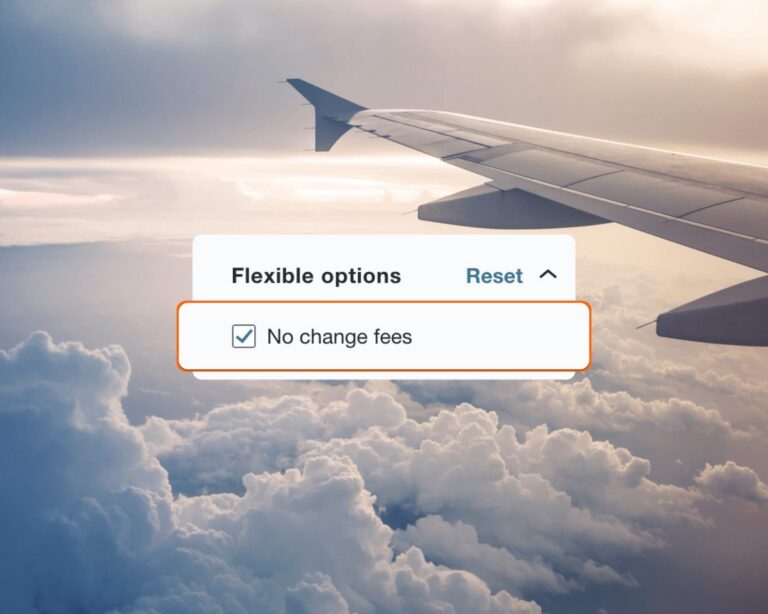
The Success Example: A “Main Cabin” booking with “No Change Fees.” The traveler pays only the $100 fare difference to move their flight back by 5 hours.
The “Ghost Hub” Disruption
A traveler chose a connection through a secondary hub because it was $200 cheaper. A ground strike occurs.
-
The Failure Example: The traveler is on two separate tickets (self-transfer). The second airline cancels the “no-show” return leg because the first flight arrived late.
-
The Success Example: A unified “Through-Ticket” booking. The carrier is legally obligated to provide a hotel and a new seat for the entire journey.
Planning, Cost, and Resource Dynamics
The economics of aviation are governed by “Yield Management,” the airline’s attempt to sell the right seat to the right customer at the highest price.
| Cost Variable | Estimated Impact | Reason for Variability |
| Base Airfare | 60% of TCO | Highly volatile, seasonal, and geopolitical. |
| Ancillary (Seat/Bag) | 10% – 20% | Increasingly “unbundled” even on premium carriers. |
| Recovery Premium | 5% – 15% | The cost of “Flexibility” or “Priority” options. |
| Labor Friction | Variable | The time spent researching and managing the booking. |
The “Cost of Failure” Table:
-
Missed Connection: $200 – $1,200 (Hotel + New Ticket).
-
Lost Billing Hours: $100 – $500/hr (for professional travelers).
-
Health Recovery: 1–2 days of “Jet Lag” downtime.
Tools, Strategies, and Support Systems
To master flight booking planning tips, one must employ a “Tech Stack” designed for global resilience:
-
GDS-Direct Side-by-Side: Tools (like ITA Matrix) that compare legacy GDS prices with raw fare data.
-
OTP (On-Time Performance) Analyzers: Checking the actual historical reliability of a specific flight number.
-
Transit Visa Databases: Verifying “TWOV” (Transit Without Visa) rules for specific hub airports before booking.
-
Circadian Planning Apps: Suggesting light exposure based on the flight’s arrival time.
-
Alliance Route Maps: Identifying “Secondary Gateways” within an alliance for better re-booking options during a crisis.
-
Automatic Price-Drop Protection: Monitoring international fare drops after booking.
-
Lounge/Shower Aggregators: Essential for maintaining physical readiness during long layovers.
Risk Landscape and Compounding Failure Modes
Risk in aviation is rarely a single event; it is a “Compounding Cascade.”
-
The “Hub-Lock” Effect: A delay at a major hub (e.g., Frankfurt) ripples through the entire network, making re-accommodation nearly impossible for 48 hours.
-
The “Separate Ticket” Trap: Booking two different carriers on separate tickets to save money. If the first flight is late, the second carrier has no obligation to help.
-
Document Entropy: A passport with 5 months’ validity when the destination requires 6; a “Transit Visa” required for a technical stop that wasn’t on the original itinerary.
Gnce, Maintenance, and Long-Term Adaptation
A robust global travel strategy requires a “Post-Trip Audit.”
-
Quarterly Review: Auditing which hubs and carriers provided the least friction. (e.g., “Is O’Hare too congested for 90-minute transfers in winter?”)
-
Loyalty Recalibration: Assessing if a status tier in one alliance still provides the best “Recovery Velocity” for your most frequent routes.
-
Adjustment Triggers: A major airline merger or a shift in hub strategy should trigger an immediate re-evaluation of all default routes.
Measurement, Tracking, and Evaluation
How do we quantify the quality of a procurement strategy?
-
Leading Indicators: Time spent in transit vs. time spent productive; number of alliance-protected legs.
-
Lagging Indicators: “Effective Hourly Rate” of the trip (Total Cost / Total Travel Time); percentage of “Zero-Friction” arrivals.
-
Qualitative Signals: The “Dignity Quotient”—did the traveler arrive feeling like a guest or a “logistical unit”?
-
Documentation Examples: Maintenance of a “Route History” log that tracks delay patterns by month and carrier.
Common Misconceptions and Oversimplifications
-
Myth: “Incognito mode is the best way to find low fares.”
Correction: Modern tracking uses device fingerprinting and IP location; incognito is a surface-level deterrent at best. -
Myth: “Direct flights are always faster.”
Correction: A well-timed connection at a high-efficiency hub (e.g., Singapore) can often beat a delayed “once-daily” direct flight from a congested airport. -
Myth: “Business Class is just about the seat.”
Correction: On international routes, it is about “Ground Priority” speeding through security and being first in line for re-accommodation. -
Myth: “The airline is legally required to put me on a competitor’s flight.”
Correction: This depends on the specific “Contract of Carriage” and the nature of the delay (Weather vs. Mechanical). -
Myth: “Booking on a Tuesday is the only way to save.”
Correction: In the era of continuous pricing, there is no “Magic Day.” Demand-based algorithms move in seconds.
Conclusion
The architecture of a superior aviation strategy is built on intellectual honesty and technical awareness. As we have seen through various flight booking planning tips, the most effective plans are those that acknowledge the inherent volatility of the global sky and build in layers of technical and logistical redundancy. The future of travel belongs to those who view the airfare transaction not as an end, but as the beginning of a complex logistical operation. By integrating TCO models, leveraging alliance networks, and maintaining a rigorous audit of carrier performance, the modern traveler can reclaim their autonomy in an increasingly fragmented sky.