Airline Check-In Guide: A Strategic 2026 Manual for Global Travelers
The formal commencement of air travel is not the moment of takeoff, but the critical juncture of data synchronization known as the check-in process. In the contemporary aviation landscape, checking in has evolved from a simple administrative formality into a high-stakes verification event where the traveler’s digital identity, health credentials, and contractual rights are reconciled with the carrier’s operational capacity. As airlines move toward hyper-automated “touchless” environments, the window between reservation and departure has become a sophisticated theater of yield management and security auditing.
Navigating this environment requires a departure from the “airport-arrival” heuristic that dominated travel behavior for decades. Modern check-in protocols are now longitudinal projects that begin precisely 24 to 48 hours before the flight and extend until the final boarding gate scan. This shift has turned a once-passive waiting period into a strategic window for seat optimization, upgrade procurement, and “disruption shielding.” To master the logistics of departure, one must understand the underlying mechanics of “Check-in Sequencing,” the phenomenon where the timing of one’s check-in can dictate everything from re-accommodation priority to the likelihood of an involuntary bump.
This editorial exploration provides a definitive framework for those who require operational precision in their global transit. By deconstructing the systemic evolution of passenger processing, the mental models required to evaluate “Documentary Resilience,” and the compounding risks associated with fragmented check-in channels, this resource establishes a high-authority benchmark for long-term strategic planning. We will move beyond the superficial “how-to” level to examine the legal and operational foundations of modern flight commencement.
Understanding “airline check-in guide.”
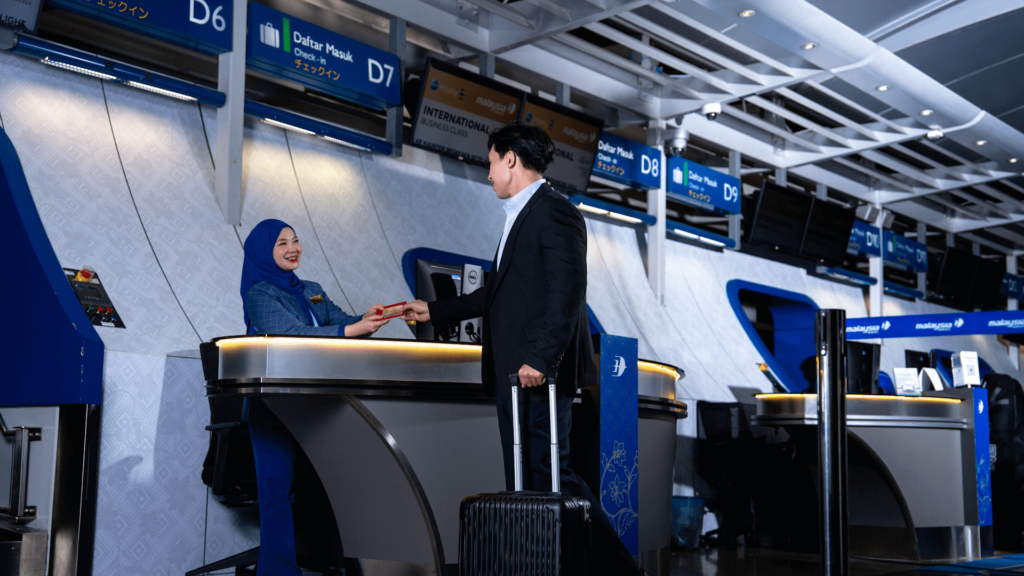
To effectively utilize an airline check-in guide, one must first dismantle the assumption that checking in is merely about obtaining a boarding pass. In a professional logistical context, the check-in event is a “Binding Acknowledgment.” It is the moment the traveler confirms their presence, allowing the airline to finalize its Weight and Balance (W&B) calculations and release “unclaimed” inventory to the standby list. The timing of this event is rarely neutral; it frequently acts as a tie-breaker in the carrier’s internal prioritization algorithms.
The Problem of Digital Sovereignty
In the era of mobile apps and web-based portals, the traveler assumes they have total control over their check-in. However, “Systemic Inhibitors” such as a mismatched passport middle name or a pending visa verification can lead to a “Technical Lockdown” of the digital channel. A high-authority analysis distinguishes between “Successful Transmission” (receiving a barcode) and “Verified Boarding” (clearing all document checks). Over-reliance on digital tools without understanding the underlying “Manual Fallback” protocols is a common point of failure for international travelers.
Multi-Perspective Evaluation
Evaluating a check-in strategy requires looking through three distinct lenses:
-
The Contractual Lens: Analyzes the “Check-in Deadline” as a hard legal boundary. Missing this by even sixty seconds can result in the forfeiture of the entire itinerary, often without a refund.
-
The Operational Lens: Focuses on “Inventory Release.” For those seeking upgrades or better seating, the check-in window is the final opportunity to manipulate the Passenger Name Record (PNR).
-
The Regulatory Lens: Involves the reconciliation of “APIS” (Advance Passenger Information System) data. This is where the airline acts as a surrogate for border control, verifying that the traveler is eligible to enter the destination country.
Deep Contextual Background: From Paper Manifests to Biometric Tokens
The history of airline processing follows the trajectory of information technology. In the Legacy Era (1950s–1980s), checking in was an exclusively human-to-human interaction. Agents manually cross-referenced paper tickets with handwritten manifests. This was the era of the “Boarding Card Envelope,” where the physical document held absolute power. Flexibility was high, but the speed of processing was limited by the physical dexterity of the gate staff.
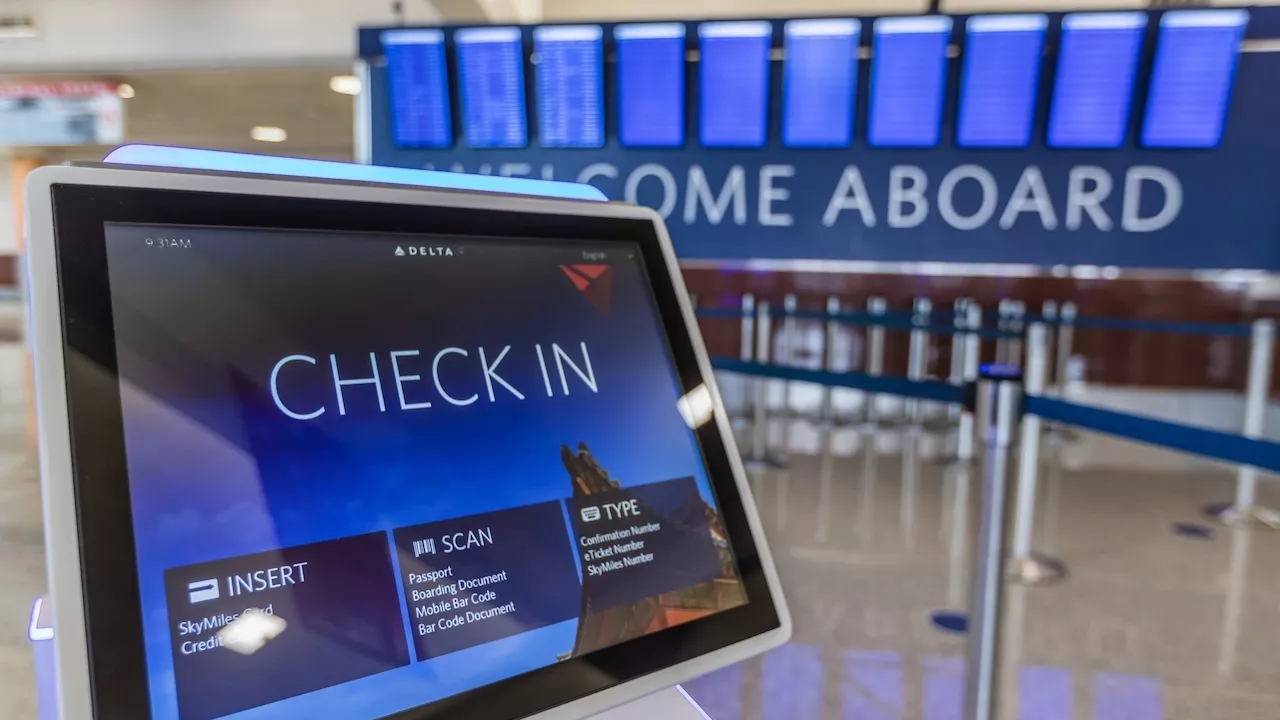
The Automation Era (1990s–2010s) introduced the Self-Service Kiosk and the web check-in portal. This era democratized the process but shifted the “Burden of Accuracy” from the carrier to the traveler. It also saw the rise of “Tiered Access,” where premium travelers bypassed the growing queues at the kiosks.
Today, we are in the Biometric and Identity-as-a-Service (IDaaS) Era. Airlines are increasingly utilizing facial recognition and “digital tokens” to replace the traditional boarding pass entirely. However, this has led to a “Technical Schism.” Travelers in highly developed hubs experience a seamless, touchless exit, while those in regional airports remain tethered to legacy 1990s systems. Understanding this lack of global parity is essential for any modern airline check-in guide, as it prevents the traveler from being lulled into a false sense of technological security.
Conceptual Frameworks and Mental Models
To navigate the complexities of modern departure, professionals utilize several mental models to assess the viability of their check-in approach.
1. The “Check-in Sequence Number” (SEQ) Model
This framework posits that every traveler is assigned a sequential number based on when they checked in.
-
The Logic: In the event of an oversold flight, airlines often use the SEQ number as a primary metric for involuntary denied boarding (IDB). Those with SEQ 150 are more likely to be bumped than those with SEQ 001.
-
The Limit: SEQ priority is often overridden by elite frequent flyer status, making it a secondary defense rather than a primary one.
2. The “Documentary Resilience” Framework
This model evaluates the check-in based on the “Verification Gradient.”
-
The Logic: An international check-in is not “Complete” until the airline has physically or digitally inspected the traveler’s visa. A top-tier plan includes a “Secondary Verification” buffer to handle potential document rejections.
-
The Limit: Digital “Document Upload” tools are notoriously prone to failure, often requiring a final manual check at the airport anyway.
3. The “Inflow-Outflow” Mental Model
This evaluates the airport check-in based on “Terminal Throughput.”
-
The Logic: The speed of the check-in counter is not constant. It is affected by the departure of other “Heavy” (wide-body) aircraft. A sophisticated departure plan accounts for the “Congestion Waves” generated by other flights departing within the same 60-minute window.
-
The Limit: Real-time terminal data is often opaque to the average consumer, requiring specialized “Flight Tracker” tools.
Key Categories of Check-In Modalities and Trade-offs
Mastering the departure requires selecting the appropriate channel based on the “Mission Profile.”
| Modality | Primary Focus | Best Case Scenario | Critical Trade-off |
| Mobile App | Speed & Agility | Domestic travel with no checked luggage. | Zero paper fallback if the phone battery fails. |
| Web Portal | Seat Optimization | Selecting a specific “Exit Row” 24 hours out. | Often cannot print “Document Verified” passes. |
| Self-Service Kiosk | Physicality | Printing bag tags at the airport for speed. | High risk of “Technical Glitch” mid-transaction. |
| Full-Service Counter | Complexity Management | International routes with visas and heavy bags. | Highest “Time Friction”; prone to queue congestion. |
| Curbside Check-in | Convenience | High-volume travelers with multiple heavy bags. | Usually requires a per-bag “Service Tip” and lacks depth. |
| Biometric/Automatic | Touchless Flow | Modern hubs (SIN, DXB) for frequent flyers. | High privacy intrusion; zero manual control. |
Detailed Real-World Scenarios and Decision Logic
The “Digital Lockdown”
A traveler tries to check in 24 hours before a flight from London to New York. The app displays an error: “Unable to process. Please see an agent at the airport.”
-
Decision Logic: The traveler must assume their “Document Verification” has failed in the backend system.
-
The Pivot: Instead of arriving 2 hours early, they must arrive 3.5 hours early to handle the manual reconciliation of their visa or ESTA status.
-
Failure Mode: Arriving late and finding a 100-person line at the “Manual Document Check” counter, leading to a missed flight.
The “SEQ” Bump Protection
A flight to a popular destination is severely oversold due to a previous cancellation.
-
Operational Logic: The airline looks for volunteers. When none appear, they move to Involuntary Denied Boarding.
-
The Outcome: The traveler who used their airline check-in guide to check in at precisely the 24-hour mark (SEQ 004) is retained on the flight, while the traveler who checked in at the airport (SEQ 188) is bumped, despite both holding valid tickets.
Planning, Cost, and Resource Dynamics
The economics of checking in are built on “Time-as-Capital” and “Fee Avoidance.”
| Item | Estimated Impact | Reason for Variability |
| Time Buffer (Domestic) | 60 – 120 Minutes | Varies by airport size and time of day. |
| Time Buffer (International) | 120 – 240 Minutes | Required for document and health verification. |
| Bag Drop Efficiency | -30 Minutes | Digital check-in allows for “Bypass” lanes. |
| Ancillary Costs | $30 – $100 | Last-minute seat selection or baggage “overage” fees. |
The “Opportunity Cost” of the Counter: For a professional whose time is valued at $200/hour, waiting in a 60-minute check-in line is a $200 expense. High-authority travel planning invests in “Priority Access” or “Mobile-Only” workflows to recover this capital.
Tools, Strategies, and Support Systems
To navigate the “Check-In Window,” one needs a specific “Tech Stack”:
-
Direct-to-Carrier Apps: Bypassing third-party OTAs for the most “Direct” data synchronization.
-
Digital Document Vaults: Storing encrypted copies of visas, vaccinations, and passports for rapid upload.
-
Automatic Check-in Services: Third-party tools that “Ping” the airline system at the exact second the window opens.
-
Terminal Maps with Queue Tracking: Identifying which security or check-in “Zones” are less congested in real-time.
-
SEQ Tracking: Monitoring one’s sequence number to assess the risk of a bump on oversold flights.
-
“Bag Tag” Pre-Printing: Using home-printed tags for carriers that support the standard to minimize airport friction.
-
Expert Seat Maps (ExpertFlyer): Identifying “Blocked” seats that may release precisely at the check-in opening.
Risk Landscape and Compounding Failure Modes
Check-in risk is “Non-Linear”; a small technical error in the PNR can lead to a total inability to board.
-
The “Name Mismatch” Trap: A ticket booked as “Jon Smith” where the passport reads “Jonathan Smith.” Digital check-in will almost always fail, requiring a manual “Name Correction” at the counter.
-
The “Weight and Balance” Purge: On smaller regional aircraft, checking in late can result in being “Offloaded” because the aircraft has reached its structural weight limit before all passengers are processed.
-
The “APIS” Data Decay: If the traveler’s passport expires within 6 months, many international check-in systems will “Silence” the booking, preventing digital check-in without explaining why.
Governance, Maintenance, and Long-Term Adaptation
A robust check-in strategy requires a “Lifecycle Management” approach:
-
The 72-Hour Audit: Verifying that the PNR is “Active” and no schedule changes have broken the check-in window.
-
The 24-Hour “Strike”: Executing the check-in at the earliest possible millisecond to secure SEQ priority and seat inventory.
-
The “Gate Check” Review: Monitoring the gate display for “Cleared Standbys,” which can indicate that your seat is being targeted for an upgrade or a bump.
Measurement, Tracking, and Evaluation
How do we quantify the success of a check-in procedure?
-
Sequence Velocity: The delta between the check-in window opening and the actual SEQ number received.
-
Queue Duration: Total time from terminal entry to “Airside” (past security).
-
Digital Completion Rate: Percentage of flights successfully checked in via mobile/web without “Counter Intervention.”
-
Seat Delta: The improvement in seat quality (e.g., Middle to Aisle) achieved during the check-in window.
Common Misconceptions and Oversimplifications
-
Myth: “The airline must wait for me if I’ve checked in online.”
Correction: Checking in is a promise to appear; if you aren’t at the gate by the “Boarding Deadline” (usually 15-20 mins before departure), your seat is released to standbys. -
Myth: “Checking in early guarantees an upgrade.”
Correction: Upgrades are usually awarded based on status and fare class; early check-in only acts as a tie-breaker between identical tiers. -
Myth: “I don’t need my passport if I have a mobile boarding pass.”
Correction: The boarding pass is a transit document; the passport is a legal identity document. Security and Gate agents will always require the latter. -
Myth: “The kiosk is the same as the counter.”
Correction: Kiosks cannot handle “Exception Logic,” such as visa issues or complicated baggage rerouting. -
Myth: “Automatic check-in is always better.”
Correction: Many automatic systems fail to allow for seat selection or meal preference confirmation, potentially putting the traveler in a less desirable seat.
Ethical, Practical, or Contextual Considerations
As we move toward “Biometric Sovereignty,” travelers must consider the trade-off between privacy and efficiency. While facial recognition check-in reduces friction to near-zero, it involves the permanent storage of biometric data in private carrier databases. For the professional traveler, the choice to opt out of these systems must be weighed against the significant “Time Tax” of manual processing. Furthermore, the reliance on smartphones for check-in creates a “Digital Divide,” where those without the latest hardware or consistent data roaming are pushed into the slowest, most expensive “Legacy Queues.”
Conclusion
The act of checking in is the final “Strategic Gateway” of air travel. It is the moment where planning meets execution. As we have seen, the most effective departures are those that treat the 24-hour check-in window as a period of active management rather than passive waiting. By applying the mental models of SEQ priority and Documentary Resilience, the modern traveler can ensure that their journey begins with operational certainty rather than administrative chaos. In an increasingly algorithmic sky, the difference between a seamless transit and a logistical failure often comes down to the quality of one’s check-in protocol.