Common Flight Booking Mistakes: A Strategic 2026 Logistics Manual
The architecture of modern aviation distribution has evolved into a hyper-complex ecosystem where a single data entry error or a misunderstanding of a “fare rule” can lead to a total logistical collapse. While the traveler of the mid-20th century dealt with the relative simplicity of standardized paper tickets and fixed pricing structures, today’s passenger navigates a landscape defined by algorithmic volatility and unbundled retailing. In this environment, a booking is not merely a purchase; it is a sophisticated contractual negotiation between the individual and a global network of carriers, aggregators, and regulators.
The erosion of consumer protections in several major jurisdictions has shifted the burden of “Connective Integrity” almost entirely onto the traveler. Consequently, the margin for error has narrowed significantly. A mistake that once might have been resolved by a sympathetic gate agent now often triggers an automated “No-Show” policy, resulting in the immediate cancellation of all subsequent segments and the forfeiture of the total ticket value. This shift requires a departure from reactive travel habits toward a proactive, editorial approach to itinerary construction.
This exploration establishes a definitive framework for identifying and mitigating the systemic risks inherent in travel procurement. By deconstructing the operational foundations of “Passenger Name Records” (PNRs) and the mental models required to evaluate “Path Resilience,” this resource serves as a cornerstone for those who require absolute operational continuity. We will move beyond the superficial list of “tips” to examine why certain errors occur and how they compound into catastrophic failures during mass disruption events.
Understanding “common flight booking mistakes.”
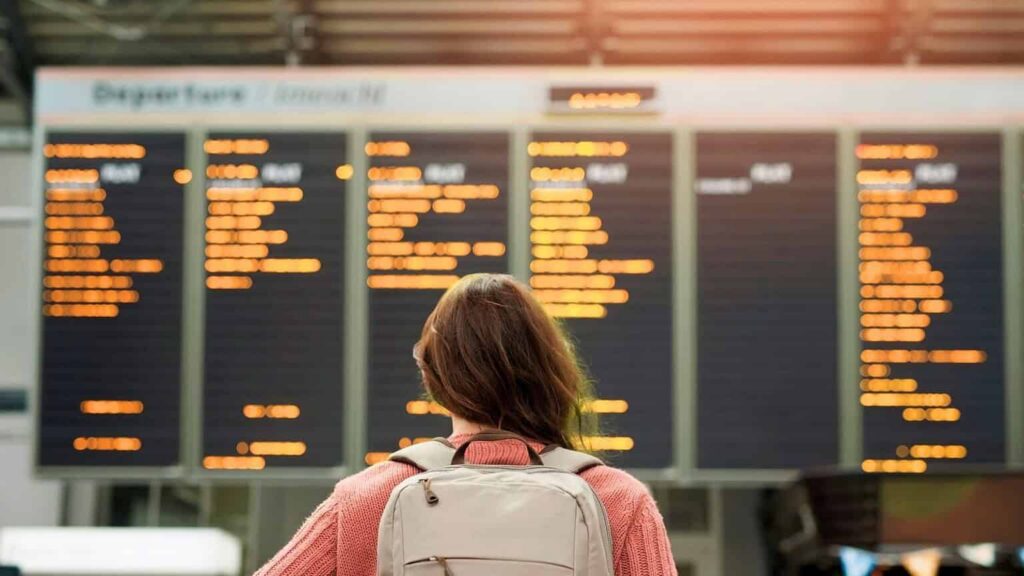
To effectively master the avoidance of common flight booking mistakes, one must first recognize that the modern booking process is designed to favor the carrier’s “Yield Management” rather than the passenger’s “Mission Success.” Mistakes in this arena are rarely just about selecting the wrong date; they are often “Architectural Errors” where the traveler builds an itinerary that is structurally incapable of surviving a minor delay or a technical change. A professional-grade analysis distinguishes between “Data Entry Errors” (typos in names) and “Strategic Errors” (failing to account for Minimum Connection Times).
The Multi-Perspective Nature of Error
The impact of a mistake varies depending on the lens through which it is viewed:
-
The Technical Perspective: Focuses on PNR Synchronization. A common error is booking through a third-party aggregator that fails to “talk” to the airline’s backend, leading to a situation where the traveler has a receipt but no valid ticket in the airline’s system.
-
The Legal Perspective: Involves the “Contract of Carriage.” Many travelers make the mistake of not understanding that a “Code-Share” flight (where one airline sells a seat on another’s plane) may have different baggage rules or upgrade eligibility than the marketing carrier.
-
The Operational Perspective: Evaluates “Transfer Viability.” The mistake here is adhering to “Legal Connections” that are “Physically Impossible” during peak airport hours or terminal changes.
Oversimplification and Algorithmic Bias
A primary source of error is the reliance on “Price-First” search algorithms. These systems are programmed to prioritize the lowest headline fare, often hiding the “Fully Loaded” cost and the “Risk Premium.” When a traveler ignores the “Contractual Rigidity” of a Basic Economy fare to save $50, they are making a strategic mistake that limits their ability to recover from a simple scheduling shift.
Contextual Background: The Evolution of Distribution Complexity
The transition from the Legacy Era (1950s–1980s) to the NDC Era (2016–Present) has fundamentally changed the nature of error. In the past, the “Interline Agreement” was the governing principle; if something went wrong, any airline could theoretically assist the passenger because they all shared a common data language and ticket stock. Error was minimized by the presence of human travel agents who acted as “Logistical Gatekeepers.”
The Digital Democratization Era (1990s–2010s) removed these gatekeepers, placing the “Logistics Load” directly on the consumer. This era saw the rise of the Online Travel Agency (OTA), which introduced the “Communication Lag” between the passenger and the carrier. Mistakes became harder to fix because the airline would often refer the passenger back to the OTA, creating a “Liability Loop.”
We are now in the era of New Distribution Capability (NDC). While this allows for more personalized offers, it has created “Content Fragmentation.” A traveler might see one price and one set of rules on a metasearch engine, but a completely different set on the airline’s own site. The most significant modern mistake is assuming that “The Internet” shows a unified, absolute truth about flight availability and pricing.
Conceptual Frameworks and Mental Models
To identify and avoid structural errors, professionals apply several rigorous mental models.
1. The “Single Point of Failure” (SPF) Model
This model treats every connection as a potential break in the chain.
-
The Logic: An itinerary with three segments has three SPFs. If the probability of success for each segment is 90%, the “Mission Success Probability” is only $0.90^3$ (72.9%).
-
The Application: Avoiding “common flight booking mistakes” involves minimizing SPFs or ensuring that each “Node” (transfer point) has high “Recovery Velocity.”
2. The “Buffer Utility” Framework
This model evaluates the value of “Time-as-Insurance.”
-
The Logic: A 45-minute connection is a “Low-Utility” asset. A 3-hour connection is a “High-Utility” asset because it provides the buffer required to absorb a late arrival, a long security line, or a gate change.
-
The Limit: There is a point of diminishing returns where a layover becomes so long that it incurs “Physical Debt” (fatigue) that undermines the trip’s purpose.
3. The “Jurisdictional Arbitrage” Mental Model
This involves selecting routes based on the strength of consumer protection laws.
-
The Logic: A traveler booking a flight from London to New York on a European carrier is protected by EU261/UK261 regulations, which provide mandatory cash compensation for cancellations. The same route on a U.S. carrier, booked with a lack of awareness of these rules, may offer zero protection for the same delay.
Key Categories of Booking Errors and Operational Trade-offs
Errors can be categorized by the “Operational Node” they affect.
| Error Category | Specific Mistake | Primary Trade-off | Long-term Consequence |
| Contractual | Basic Economy on Long-Haul | Lower initial price vs. zero flexibility. | Total loss of fare if a meeting is moved. |
| Logical | Separate PNR Connections | Price arbitrage vs. zero connection protection. | Stranded at a hub with “No-Show” cancellation. |
| Technical | Typos in Legal Name | Speed of booking vs. security compliance. | Denied boarding at the gate; ticket re-issue fees. |
| Temporal | Ignoring Time Zones | Ease of search vs. arrival accuracy. | Booking a hotel for the wrong night, missed meetings. |
| Regulatory | Document/Visa Expiry | Price focus vs. border compliance. | Immediate deportation or denied boarding. |
| Ancillary | Un-prepaid Baggage | “Headline” savings vs. airport fees. | Paying 300% more for bags at the counter. |
Detailed Real-World Scenarios and Decision Logic
The “Dual-Airport” Trap
A traveler books a flight into London Heathrow (LHR) and a connecting flight out of London Gatwick (LGW) with a 3-hour layover.
-
The Error: Failing to account for “Inter-Terminal Logistics.” 3 hours is not enough time to clear customs, retrieve bags, travel 30 miles across London, and re-check in.
-
Decision Logic: The professional rejects any itinerary requiring a change of airport unless a 6-hour “minimum safety window” is present.
The “Out-of-Sequence” Purge
A traveler decides to skip the first leg of their flight (San Francisco to New York) and just board the second leg (New York to London).
-
The Error: Assuming flights are “Point-to-Point” rather than “Sequential.”
-
Outcome: The airline’s computer automatically cancels the New York to London leg and the return trip the moment the passenger fails to board in San Francisco.
Planning, Cost, and Resource Dynamics
The economics of booking mistakes are governed by the “Cost of Recovery” versus the “Cost of Prevention.”
| Resource | Prevention Cost | Recovery Cost (Post-Error) |
| Capital | $50 – $100 (Flexibility Premium) | $500 – $2,500 (Last-minute Ticket) |
| Time | 30 minutes (Audit/Research) | 6 – 48 hours (Stranded in Hub) |
| Labor | Mental load of checking rules | Physical exhaustion from re-booking |
The “Risk-Adjusted Price” Calculation:
A “cheap” $400 ticket with a 50% chance of failure (tight connection + storm season) has a “Risk-Adjusted Price” of $800 ($400 base + 50% probability of a $800 recovery ticket). A “reliable” $600 ticket has a 95% success rate. The more expensive ticket is mathematically the better “Value” for the budget.
Tools, Strategies, and Support Systems
To systematically eliminate common flight booking mistakes, one must employ a “Logistics Stack”:
-
Direct-Connect GDS Visualizers: Using tools like ITA Matrix to verify “Fare Rules” before purchase.
-
MCT (Minimum Connection Time) Databases: Verifying if a connection is “Legal” but “Risky” based on airport historical data.
-
PNR Integrity Checkers: Verifying that the 6-digit code shows “Confirmed” and “Ticketed” in the carrier’s official app.
-
Visa/Passport Verification Hubs: Utilizing official government databases (e.g., IATA Timatic) to ensure document compliance.
-
Multi-Modal Buffer Planners: Tools that calculate “Ground Logistics” between airports in the same city.
-
OTP (On-Time Performance) Analyzers: Checking if a specific flight number has a history of “Chronic Delay” on the day of the week you are flying.
-
Fare-Lock Services: Paying a small fee to “Freeze” a price while a second agent audits the itinerary for structural flaws.
Risk Landscape and Failure Modes
A booking error is often a “Latent Failure”—it exists in the document but only becomes “Active” during a disruption.
-
The “Communication Silo” Failure: Booking through an OTA that doesn’t forward the passenger’s email to the airline. The flight is cancelled, the airline notifies the OTA, the OTA fails to notify the passenger, and the traveler arrives at the airport for a flight that doesn’t exist.
-
The “Weight and Balance” Offload: Travelers who make the mistake of not selecting a seat early may be the first “Involuntary Denied Boarding” (IDB) candidates on an overbooked flight.
Governance, Maintenance, and Long-Term Adaptation
A professional travel strategy requires “Continuous Monitoring” of the PNR:
-
The 72-Hour Audit: Checking the booking 72 hours after purchase to ensure the “Ticket” was actually issued (not just “Reserved”).
-
The Schedule-Change Monitor: Airlines change flight times months in advance. The mistake is not checking the itinerary until the day of travel, missing the “Free Refund” window triggered by a major schedule shift.
-
The “Document Expiry” Review: A checklist that verifies passport validity (6-month rule) at the time of booking, not the week of departure.
Measurement, Tracking, and Evaluation
How do we measure the “Quality” of a booking?
-
Path Resilience Score: The number of “Alternate Corridors” available if the primary hub fails.
-
Recovery Velocity Ratio: (Potential Recovery Time / Original Travel Time).
-
Documentation Traceability: Keeping a record of the “Fare Rules” and “Carrier Contract” in a searchable PDF during the journey.
-
Lead-Indicator Tracking: Number of “Verification Checks” performed between the time of booking and the time of boarding.
Common Misconceptions and Oversimplifications
-
Myth: “The airline will just put me on the next flight if I miss my connection.”
Correction: Only if it was on a single PNR and there is a seat. If the next flight is in 48 hours, you are stuck for 48 hours. -
Myth: “Incognito mode stops prices from going up.”
Correction: This ignores IP-based tracking and the fact that fare buckets are shrinking because other people are booking simultaneously. -
Myth: “A ‘Legal’ connection is a safe connection.”
Correction: Legal means the airline is allowed to sell it, not that it is operationally viable for a human with luggage. -
Myth: “Third-party sites are always cheaper.”
Correction: Often, the “hidden fees” and the “Cost of Support” (when things go wrong) make them significantly more expensive than booking direct. -
Myth: “The airline must give me a hotel for a weather delay.”
Correction: In the U.S., they are not legally obligated to provide anything for “Acts of God.” -
Myth: “I can use my middle name instead of my first name.”
Correction: Secure Flight data requires an exact match to the government ID; any variance can trigger a manual security check or denied boarding.
Conclusion
The pursuit of “Frictionless Travel” is a balance of technical precision and structural skepticism. As we have examined, the most catastrophic common flight booking mistakes are not the result of bad luck, but of bad architecture. By moving from a “search-and-buy” mentality to a “design-and-verify” framework, the traveler can reclaim control over their logistical destiny. In a sky governed by algorithms and leaner operational margins, the ultimate authority is the passenger who understands the contract they are signing and the network they are navigating.