How to Manage Flight Schedule Changes: The 2026 Strategic Manual
The global aviation network operates as a high-velocity, interconnected system where the concept of a “fixed” itinerary is increasingly becoming a relic of a less complex era. For the modern passenger, a flight reservation is less a static contract and more a dynamic placeholder within an airline’s shifting operational landscape. Schedule changes ranging from minor five-minute adjustments to the total dissolution of a flight path are the byproduct of a hyper-efficient industry that constantly recalibrates its assets against fuel costs, labor availability, and geopolitical shifts.
Navigating these adjustments requires a transition from a passive consumer role to an active logistical architect role. When an airline modifies a flight, it triggers a cascade of regulatory implications and contractual shifts that most travelers are ill-equipped to exploit. The deceptive simplicity of a “Schedule Change” notification often masks a significant opportunity for the traveler to renegotiate their transit terms, provided they understand the underlying mechanics of the Passenger Name Record (PNR) and the specific legal thresholds established by civil aviation authorities.
In this contemporary environment, the difference between a ruined trip and a successful rerouting lies in the speed and precision of the passenger’s response. Strategic management involves more than merely accepting a new flight time; it necessitates an audit of the entire journey’s integrity, from connection feasibility to the “Fully Loaded Cost” of the revised arrival time. This article provides a definitive, editorial-grade framework for mastering the volatility of airline scheduling, moving beyond surface-level advice to examine the systemic logic that governs the skies.
Understanding “how to manage flight schedule changes.”
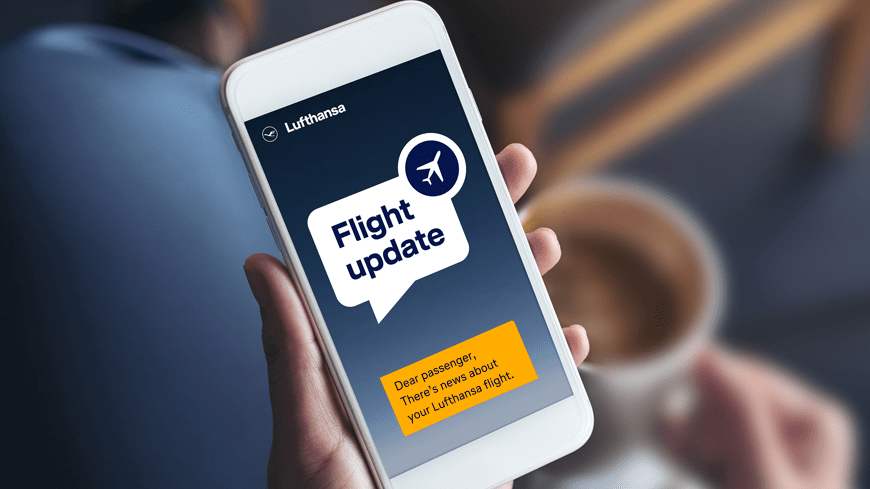
To effectively manage flight schedule changes, one must first decouple the “Marketing Flight” from the “Operational Reality.” A marketing flight is the promise sold six months in advance; the operational reality is the plane that actually leaves the gate. A schedule change is the airline’s formal admission that the two no longer align.
Multi-Perspective Utility
From a technical perspective, a schedule change is a “Re-accommodation” event. This is the moment when the airline’s software attempts to fit thousands of displaced passengers into remaining inventory using a priority algorithm. If you wait for the system to choose for you, you are relegated to the “Residual Inventory”—the seats nobody else wanted. From a regulatory perspective, particularly under U.S. Department of Transportation (DOT) and EU 261/2004 mandates, a “Significant Change” is a legal trigger that grants the traveler the right to a full cash refund, regardless of the non-refundable nature of their original ticket.
The Risk of Oversimplification
A common misunderstanding is that a schedule change is always a negative event. In a professional logistical context, a schedule change is often a “Contractual Reset.” It allows the passenger to change their arrival or departure city to a nearby alternative, switch to a more desirable aircraft type, or even move their travel dates by several days without paying a change fee or fare difference. The mistake most travelers make is clicking “Accept” on the first automated notification they receive, effectively closing their window for negotiation.
Deep Contextual Background: The Industrial Logic of Volatility
The prevalence of schedule changes is rooted in the Evolution of Yield Management. In the pre-digital era, airline schedules were published in massive physical volumes twice a year. Changes were rare because the cost of re-communicating those changes to the public was prohibitive. Today, airlines use “Dynamic Scheduling” engines that allow them to cancel under-performing flights or swap aircraft types up to 72 hours before departure to maximize profit.
Between 2020 and 2026, the industry moved toward a “Lean Operations” model. Airlines no longer keep significant “Spare Capacity” (extra planes and crews) on standby. Consequently, a minor labor shortage in a regional hub or a delay in a plane’s maintenance cycle now triggers a “Network-Wide” schedule adjustment months in advance. We are currently in the Era of Algorithmic Re-protection, where the first three iterations of a flight change are often handled by bots rather than human dispatchers, leading to the nonsensical connections (e.g., a 20-minute layover in a massive hub) that savvy travelers must learn to identify and reject.
Conceptual Frameworks and Mental Models
1. The “Significant Change” Threshold Model
This is the primary legal anchor for all negotiations.
-
The Logic: Aviation authorities define “Significant” differently, but the 2024–2026 U.S. standards typically point to a 3-hour domestic or 6-hour international shift.
-
The Strategy: Once this threshold is crossed, you hold the “Financial Lever.” You can demand a refund or a re-routing on the airline’s “Prime Inventory” (their best flights), which would otherwise be cost-prohibitive.
-
Limit: If the change is minor (e.g., 15 minutes), the airline is not legally obligated to offer you any flexibility.
2. The “Minimum Connection Time” (MCT) Framework
Treating the airport as a physical throughput system.
-
The Logic: Every airport has a coded MCT (e.g., 60 minutes for JFK Terminal 4). If a schedule change reduces your layover to 59 minutes, the reservation is “Illegal” in the system.
-
The Strategy: Use “Illegal Connections” as a justification to move to a much better flight path with a 3-hour buffer, citing “Operational Safety.”
3. The “Involuntary Reroute” (INVOL) Mental Model
This determines your status in the airline’s hierarchy.
-
The Logic: A schedule change is an “Involuntary” action by the carrier. Unlike a “Voluntary” change, where you pay the difference, an INVOL change means the airline must get you to your destination at their expense, regardless of the current price of the new seat.
-
The Application: Use the phrase “INVOL Reroute” when speaking to agents to signal that you understand the fare rules no longer apply.
Key Categories of Schedule Modifications and Trade-offs
| Modification Type | Definition | Strategic Trade-off | Success Probability |
| Minor Chronological | < 30-minute shift. | Annoyance vs. Acceptance. | High (Limited recourse). |
| Significant Chronological | > 3-hour shift. | Refund vs. Total Reroute. | 100% (Legal mandate). |
| Equipment Swap | Change in plane type (e.g., 787 to 737). | Comfort vs. Schedule. | Low (Unless in Premium). |
| Hub Change | Connection moved from Hub A to Hub B. | Ease of transit vs. Arrival time. | High (Flexible re-routing). |
| Route DissolutionThe flight | It is canceled entirely. | Full refund vs. Alternative Carrier. | 100% (Total leverage). |
| Frequency Reduction | Daily flight becomes 3x weekly. | Date flexibility vs. Destination change. | High (Inter-line options). |
Detailed Real-World Scenarios and Decision Logic
The “Illegal Connection” Trap
A passenger is flying from Seattle to London via Chicago. A schedule change moves the Seattle leg 15 minutes later, leaving a 40-minute connection in Chicago.
-
The Error: The passenger assumes they can run fast.
-
The Risk: If the first flight is 10 minutes late, the passenger is stranded in Chicago overnight.
-
Decision Logic: Reject the change immediately. Research a different connection through Dallas or a direct flight (if available) and present it to the agent as a “Mandatory Safety Adjustment” due to MCT violations.
The “Ghost Flight” Maneuver
An airline cancels a 10:00 AM flight and moves the passenger to a 6:00 AM flight.
-
The Strategy: Check if there is a 12:00 PM flight that is currently “Sold Out” or very expensive.
-
The Logic: Because this is an INVOL change, the airline can “Force” a seat on that 12:00 PM flight for you, even if it shows as full to the general public.
-
Outcome: You secure a better time slot than you originally had, effectively upgrading your “Temporal Utility.”
Planning, Cost, and Resource Dynamics
Managing schedule changes is a balance of “Temporal Capital” and “Financial Literacy.”
| Factor | Direct Cost | Opportunity Cost | Mitigation Resource |
| Early Detection | $0 | High (Loss of better seats). | Automated price/flight trackers. |
| Last-Minute Fix | $200+ (Hotels/Food) | Total (Missed events). | Travel insurance; “Executive Desk” access. |
| Reroute Negotiation | $0 (if INVOL) | 2-4 hours. | “ExpertFlyer” or “ITA Matrix” data. |
The “Response Window” Table:
-
First 24 Hours: Best inventory availability; agents are most flexible.
-
7 Days Later: System “Hardens” the new PNR; choices are limited.
-
Day of Flight: Chaos-driven decisions; no strategic leverage.
Tools, Strategies, and Support Systems
To systematically execute a recovery plan, one requires a “Logistical Stack”:
-
ExpertFlyer (Flight Alerts): This is the gold standard. It notifies you of a schedule change before the airline’s automated email system even triggers.
-
ITA Matrix: Used to find the “Hidden” flight paths the airline’s website won’t show you. You find the path, then tell the agent: “I see space on Flight 402.”
-
The “Contract of Carriage” (CoC): Every airline has a CoC PDF on its site. Section “Rule 240” or “Rule 80” usually contains the exact wording of what they owe you during a change.
-
Twitter (X) / Direct Messaging: Often staffed by more senior agents than the standard phone line, and they have the power to manually “Sync” a broken ticket.
-
Multi-Language Phone Lines: If the U.S. line has a 2-hour wait, call the airline’s Singapore or German office (most speak English). They can access the same GDS and fix your flight in minutes.
-
“TripIt” or “Flighty”: Aggregators that monitor the “Real-Time” status of the aircraft assigned to your flight, predicting changes before they are official.
Risk Landscape and Failure Modes
-
The “Passive Acceptance” Mode: If you do nothing, the system “Auto-Accepts” the change for you after 72 hours. You lose your right to a refund.
-
The “Agency Loop” Risk: If you booked through a discount site (Expedia, Hopper), the airline cannot touch your ticket until the day of departure. You are stuck in a triangle of blame where the agency says, “The airline changed it,t” and the airline says, ys “Talk to your agency.”
-
The “Ancillary Orphan” Failure: You move to a new flight, but your “Pre-paid Extra Legroom” or “Special Meal” doesn’t transfer. This requires a separate manual “EMD” (Electronic Miscellaneous Document) sync.
Governance, Maintenance, and Long-Term Adaptation
Schedule management requires a “Check-Cycle” governance:
-
The Monthly Audit: For trips booked 6 months out, check the PNR on the airline’s site on the first of every month.
-
The “T-Minus 14” Rule: Major schedule shifts often happen exactly 14 days before departure as the airline finalizes its crew rotations. Perform a final “Path Audit” here.
-
Documentation Protocol: Always screenshot your original itinerary. When the change happens, you need proof of the “Before” to justify the “After.”
Measurement, Tracking, and Evaluation
How do you evaluate if you managed a change successfully?
-
Delta in Arrival Time: Did you arrive within 60 minutes of your original plan?
-
Capital Preservation: Did you avoid paying any “Change Fees” or “Fare Differences”?
-
Utility Score: Is the new aircraft better (e.g., A350 vs. 737)? Is the new connection hub more reliable (e.g., Munich vs. Heathrow)?
-
Documentation Traceability: Did you receive a new “Ticket Number” (starts with 3 digits)? A “Reservation Code” change is not enough; the ticket must be “Re-issued” to be valid.
Common Misconceptions and Oversimplifications
-
Myth: “The airline must put me on another airline.”
Correction: In the U.S., they are only obligated to refund you. Placing you on a competitor (Inter-lining) is a “Discretionary” act, usually reserved for elite members or severe disruptions. -
Myth: “I have to accept the first flight they give me.”
Correction: You are entitled to any available seat on their network that gets you to your destination, provided the change was “Significant.” -
Myth: “Weather-related changes don’t count.”
Correction: While weather exempts them from paying for your hotel, it does not exempt them from the refund mandate if the change is significant. -
Myth: “If I miss my connection, it’s the airline’s problem.”
Correction: Only if it’s on one ticket. If you booked two separate flights (“Self-Transfer”), a schedule change on Flight A that breaks Flight B is 100% your financial responsibility.
Conclusion
Managing the volatility of air travel is no longer a matter of luck; it is a matter of “Systemic Mastery.” As we have explored, managing flight schedule changes is a process of leveraging regulatory thresholds, technical MCT data, and the “INVOL” status to reclaim control of your journey. The airline industry will continue to optimize for its own efficiency, often at the expense of the passenger’s time. However, the traveler who treats their PNR as an evolving contract and who possesses the tools to audit that contract can transform an operational failure into a logistical victory. Success in the modern sky is defined by the passenger who speaks the language of the GDS and refuses to be a passive observer of their own itinerary.