Flight Booking Routes: A Strategic Reference for Global Logistics
The structural integrity of the global aviation network relies on a complex, multi-layered architecture of city-pairs, hub-and-spoke dynamics, and fifth-freedom rights. For the modern traveler or logistics strategist, navigating these corridors is no longer a matter of simple point-to-point selection. It has become a sophisticated exercise in risk management and “Connective Resilience.” As geopolitical boundaries shift and airline alliances consolidate, the geometry of the sky has transformed into a dynamic marketplace where the “path of least resistance” is often obscured by algorithmic pricing and fragmented distribution standards.
Navigating this environment requires a departure from the “lowest-fare” heuristic that has dominated consumer behavior for decades. While digital transparency initially favored price discovery, it eventually led to a “race to the bottom” where the most efficient paths were stripped of their utility, leaving travelers vulnerable to “Cascading Delays” and “Hub-Lock” events. To secure a successful journey, one must now analyze the “Total Logistical Friction” of an itinerary, a metric that accounts for transfer complexity, seasonal weather volatility, and the recovery velocity of the specific carrier network.
This editorial exploration provides a rigorous foundation for understanding the intricacies of aviation corridors. By deconstructing the systemic evolution of hub-and-spoke models and the mental models required to evaluate “Path Dependency,” this resource establishes a benchmark for professional-grade travel planning. This is not merely a collection of travel tips; it is a definitive reference designed to transform a passive transaction into a strategic asset, ensuring operational continuity in an increasingly volatile global environment.
Understanding “flight booking routes.”
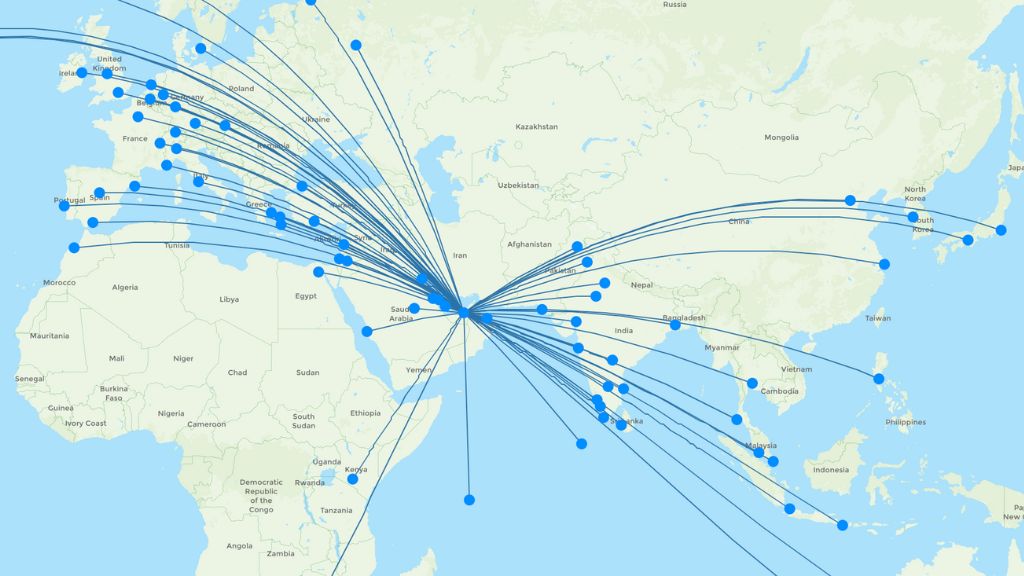
To articulate the value of various flight booking routes, one must first dismantle the assumption that the shortest path is the most efficient. In a professional logistical context, a “route” is a contractual sequence of flights governed by the “Contract of Carriage.” It encompasses the physical aircraft path, the minimum connection time (MCT) at transfer nodes, and the interlining agreements between carriers. The common error is to view a route as a static line on a map, when its most critical function is “Network Redundancy,” the ability of the system to absorb a failure at one node without invalidating the entire journey.
Multi-Perspective Utility
From a technical perspective, the quality of a route is determined by its “Path Dependency.” A direct flight has low dependency; a three-leg international itinerary has high dependency. From a strategic perspective, it is about “Liquidity.” A route through a major alliance hub (like London Heathrow or Singapore Changi) is a liquid asset; if one flight is canceled, the system provides dozens of alternate paths. Conversely, a “Self-Transfer” route between two low-cost carriers is a rigid asset, offering zero protection during a disruption.
The Problem of “Soft” vs. “Hard” Connections
“Hard” connections are booked on a single Passenger Name Record (PNR). These are legally protected under international aviation protocols. “Soft” connections are “hacked” together via separate tickets to save capital. A high-tier travel plan relies on “Hard” routes, ensuring that the traveler is never dependent on the “mercy” of an airline’s customer service desk during a weather event. Oversimplifying this as a simple “transfer” ignores the legal “Chain of Responsibility” that governs the journey.
Contextual Background: The Evolution of the Global Hub System
The history of flight routing follows a cyclical pattern of technological “stretch” and economic consolidation. In the “Legacy Era” (1950s–1970s), international travel was a series of technical stops. A flight from London to Sydney required multiple refueling points in the Middle East and Southeast Asia. These “refueling corridors” were the primary flight booking routes of the era, defined by the physical limits of early jet engines.
The “Hub-and-Spoke Revolution” (1980s–2000s) saw the rise of mega-hubs. Carriers realized they could maximize “Load Factors” by funneling all traffic through a central point. This era democratized travel but created systemic bottlenecks. If a storm hit a central hub like O’Hare or Frankfurt, the entire regional network collapsed.
We are now in the “Point-to-Point Resurgence” (2010s–Present). The advent of the Boeing 787 and Airbus A350 made “Ultra-Long-Haul” (ULH) flights economically viable. These aircraft allow travelers to bypass hubs entirely. However, this has created a new risk profile: while direct flights reduce transfer friction, they often operate only once daily. If a direct flight is canceled, the traveler must wait 24 hours, whereas a hub-based route might offer an alternate flight every 90 minutes.
Conceptual Frameworks and Mental Models for Route Selection
To evaluate the strength of an itinerary, logistics professionals apply three rigorous mental models.
1. The “Connective Resilience” Model
This framework posits that a route is only as strong as its most volatile node.
-
The Logic: If you are booking a route through a hub prone to winter storms (e.g., Munich) versus a southern hub (e.g., Madrid), the Madrid route has higher resilience regardless of price.
-
The Limit: This model fails during “Black Swan” events, such as air traffic control strikes, which can hit high-resilience hubs without warning.
2. The “Recovery Velocity” Framework
This model prioritizes the speed at which a route can be repaired after a failure.
-
The Logic: Route A has 10 flights per day between the hub and the destination. Route B has only one. Even if Route B is $200 cheaper, Route A is the superior strategic choice for mission-critical travel because its “Recovery Velocity” is ten times higher.
-
The Limit: High-velocity routes are often more expensive due to higher demand from business travelers.
3. The “Asset Liquidity” Model
This treats a booking as a store of value.
-
The Logic: A “Through-Ticket” on a major alliance is a liquid asset. It can be converted into a seat on a partner airline instantly. A “Self-Transfer” is “Restricted Equity”; it can only be used on the specific carrier you booked.
-
The Limit: Maintaining total liquidity can lead to significant “Opportunity Cost” in terms of unspent capital on shorter, low-risk routes.
Key Categories and Operational Typologies of Routes
Identifying the right path involves matching the “Mission Profile” to the appropriate “Capability Tier.”
| Category | Primary Strategic Focus | Best Use Case | Critical Trade-off |
| Direct (Point-to-Point) | Time Minimization | High-value, short-duration missions. | Single point of failure; often a price premium. |
| Hub-and-Spoke (Single PNR) | Systemic Resilience | Global transit with high disruption risk. | Increased physical fatigue due to transfers. |
| Fifth-Freedom Routes | Luxury & Value | Booking a mid-route leg of a foreign carrier. | Limited schedule options; niche availability. |
| Open-Jaw | Logistical Utility | Multi-city tours or complex relocations. | Higher administrative burden for car/hotel sync. |
| Interline/Partner Mix | Global Reach | Reaching remote or secondary airports. | Potential for “Service Gaps” between carriers. |
| Self-Transfer (Multi-Ticket) | Capital Preservation | Low-stakes leisure travel with high buffers. | Zero legal protection during delays; high risk. |
Detailed Real-World Scenarios and Decision Logic

The “Meeting Drift” Adjustment
A traveler has a conference in Berlin. The closing keynote might move, or a new networking event might arise.
-
Decision Logic: Avoid the “last flight of the day” direct route. Instead, book a route through a high-frequency hub like London or Paris.
-
Outcome: If the traveler needs to stay an extra three hours, they can pivot to a later “Spoke” flight. If they took the direct flight, they would be forced to stay an entire extra night.
The “Winter Hub” Cascade
A traveler is flying from Los Angeles to Delhi. They can route through London or Dubai.
-
Decision Logic: In January, the Dubai route (Southern Corridor) is objectively superior to the London route (Northern Corridor).
-
Second-Order Effect: By avoiding the risk of de-icing delays and fog in London, the traveler ensures their “Connective Integrity” is maintained, even if the Dubai route is slightly longer in miles.
Planning, Cost, and Resource Dynamics
The economics of routing are governed by “Yield Management.” As you add “Legs” to a route, the price does not necessarily increase; often, it decreases as carriers use hubs to compete with other airlines’ direct flights.
| Route Tier | Cost Range (vs Direct) | Primary Value Driver |
| Non-Stop | 100% (Baseline) | Pure time efficiency. |
| Single Stop (Alliance) | 70% – 90% | Balance of cost and resilience. |
| Multi-Stop / Long Layover | 50% – 70% | Maximum capital preservation. |
| Open-Jaw / Multi-City | 110% – 130% | Maximum logistical utility. |
Resource Variability: In highly competitive corridors (New York to London), the cost of a “Non-Stop” is often lower because the volume is so high. In “Thin” routes (regional cities), the “Hub-and-Spoke” model is the only affordable way to maintain connectivity.
Tools, Strategies, and Support Systems
To effectively manage complex flight booking routes, one must utilize a “Tech Stack” that counters airline yield algorithms:
-
GDS-Direct Side-by-Side: Tools (like ITA Matrix) that allow travelers to see the raw “Route Map” and “Fare Construction” before the marketing layer is applied.
-
Minimum Connection Time (MCT) Audits: Manually verifying if a 45-minute transfer is realistic at a specific airport during peak hours.
-
Alliance Route Visualizers: Identifying which partner carriers can serve as “Redundancy Backups” for a specific path.
-
VPN & Identity Hygiene: Mitigating “Point-of-Sale” price discrimination where a route booked in one country is cheaper than in another.
-
Transit Visa Databases: Verifying if a specific route requires a “Technical Stop” visa (common in the UK and Australia).
-
“Ghost Hub” Identification: Avoiding hubs that are undergoing major construction or labor disputes, regardless of price.
Risk Landscape and Failure Modes
Routing is not a “Silver Bullet”; it has its own taxonomy of failure.
-
The “Invisible Technical Stop”: A route marketed as “Direct” that actually lands for fuel or passenger pick-up (e.g., certain trans-African routes). This adds two hours of risk without the benefits of a hub.
-
The “Terminal Change” Trap: A 60-minute connection that requires a train or bus between terminals (e.g., Heathrow T5 to T3). This is a “Functional Failure” even if it is a “Legal Connection.”
-
The “Currency Devaluation” Pivot: Airlines suddenly canceling routes to specific countries due to economic instability, leaving travelers with “Orphaned Bookings.”
Governance, Maintenance, and Long-Term Adaptation
A robust travel strategy requires a “Feedback Loop” to ensure route selection remains optimized.
-
The Quarterly Route Audit: Review the last 10 trips. Did a specific hub consistently cause 30-minute delays? If so, “Blacklist” that hub for future mission-critical travel.
-
The “Waiver Monitor”: Maintaining a real-time feed of “Carrier Waivers.” If an airline issues a weather waiver for a hub, use your “Flexible” rights to re-route through a different hub before the cancellations start.
-
Alliance Re-alignment: Recognizing when an airline switches alliances (e.g., SAS moving to SkyTeam), which fundamentally changes the “Connective Resilience” of your existing route patterns.
Measurement, Tracking, and Evaluation
How do we quantify the “Return on Routing”?
-
Effective Hourly Rate (EHR): (Total Trip Cost / Total Hours Door-to-Door).
-
Connective Success Rate (CSR): Percentage of transfers made without “Stress Interventions” (running to gates).
-
Capital Liquidity Ratio: Percentage of your routes that are on a single PNR versus fragmented tickets.
-
Documentation Examples: Maintaining a “Hub Diary” that logs transfer times and lounge quality to inform future procurement.
Common Misconceptions and Oversimplifications
-
Myth: “Non-stop is always the safest choice.”
Correction: If the non-stop flight breaks down and only flies once a day, a hub-based route with hourly flights is actually safer. -
Myth: “The airline will always put me on the next flight if I miss a connection.”
Correction: Only if it is a “Legal Connection” on a single PNR. On separate tickets, you are a “No-Show.” -
Myth: “Connecting flights are always cheaper.”
Correction: In “Business Corridors,” airlines price direct flights competitively to attract high-yield corporate travelers. -
Myth: “Airport transfers are always included.”
Correction: In “City-Pairs” like London (LHR to LGW) or Tokyo (NRT to HND), the traveler is responsible for the ground transfer, which carries significant risk.
Conclusion
The pursuit of optimal flight booking routes is an admission of the unpredictable nature of global systems. It is a strategic pivot from the “Efficiency of the Known” to the “Resilience of the Unknown.” As we have seen, the most effective strategies are those that treat a route as a multi-layered asset combining legal protection, physical geography, and technical redundancy. In an increasingly algorithmic aviation marketplace, the traveler’s primary defense is not a lower price, but a wider variety of paths. By applying the mental models of Connective Resilience and Recovery Velocity, one can ensure that every journey is an adaptable asset, resilient to the inevitable shifts of the global sky.