
Top Aviation Experience in America: The 2026 Reference Guide
The pursuit of high-level interaction with commercial, historic, and tactical aerospace architecture within the United States has passed beyond simple tourism. While the early phase of aviation enthusiasm was characterized by passive spectating at regional airfields or static museum installations, the contemporary landscape is defined by deeply integrated, high-fidelity operational environments. For institutional curators, asset allocators, and advanced private aviators, engaging with elite aerospace machinery is an intricate exercise in structural resource verification, technical risk management, and historical authenticity auditing. To interact with this market at a professional standard, one must look beyond surface-level consumer packages and interrogate the operational infrastructures that differentiate superficial simulations from true topical mastery.
In 2026, the domestic aviation environment operates on a complex continuum spanning preserved military-industrial history, high-tier civil flight operations, and deep-immersion technical training assets. This structural ecosystem means that an identical historical airframe, such as a North American P-51D Mustang, can be encountered across entirely distinct operational planes, ranging from a static, humidity-controlled archival display to a high-g, live-fly tactical environment under Part 91 or Part 135 experimental operating regulations. Navigating this landscape requires an analytical paradigm shift from casual observation to systemic programmatic evaluation, separating marketing veneer from raw mechanical reality.
The operational complexity of high-tier aviation involvement is magnified by the intense specialized fragmentation of asset classes. True depth of engagement is rarely found in generalized public displays; it resides within highly specialized operations that require a comprehensive understanding of regulatory parameters, structural maintenance limitations, and historical restoration integrity. Achieving systemic value and qualitative clarity demands an analytical framework that incorporates these multi-variant parameters into a comprehensive operational matrix. This article serves as the definitive reference for analyzing, structuring, and optimizing high-fidelity aerospace interactivity across the United States.
Understanding “top aviation experience in America.”
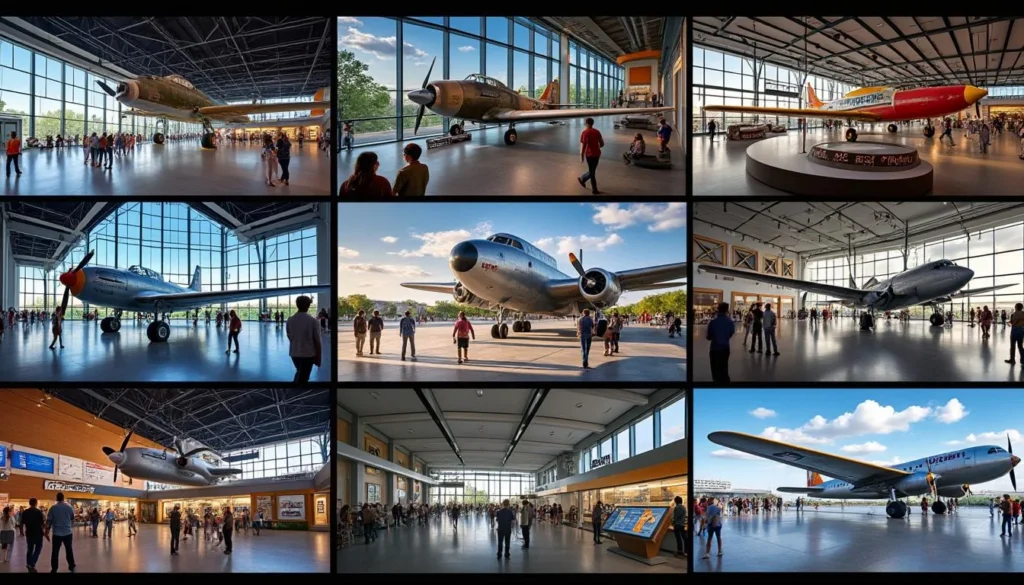
The primary intellectual failure in evaluating the landscape of the top aviation experience in America is the industry’s tendency to equate mass-market popularity or high-volume attendance with true qualitative depth. Most consumer-facing directories rank aviation encounters based on simple footprint size or annual foot traffic, relying on cached metrics that prioritize large-scale public museums or high-volume air shows over high-fidelity, low-access operational environments. For the professional logician or serious archivist, this introduces a profound “Divergence Risk,” where the density of the crowd stands in direct opposition to the depth and precision of the interaction.
A rigorous, multi-perspective analysis reveals that the true metric of an authoritative aviation asset is its “Operational Fidelity to the Root.” This term defines how closely an environment replicates or preserves the raw mechanical, physical, and historical realities of flight. Sourcing pathways that rely on digitized consumer aggregation often mask the underlying quality of the asset, presenting standard, high-throughput motion-platform simulators under the same conceptual umbrella as live-fly, multi-axis aerobatic training or genuine, matching-numbers warbird operations that preserve real-time analog flight telemetry.
Conversely, professional structures that evaluate aviation engagement through direct technical vetting bypass these consumer-facing aggregators. This analytical clarity offers complete transparency regarding airframe maintenance certifications, historical logbook tracking, and instructor-pilot background depth. The risk of oversimplification in this space centers on treating all high-end aviation encounters as uniform commodities. A specific facility may be exceptional for archiving Cold War strategic assets while proving entirely deficient when providing high-altitude physiology or upset recovery training. To master the paradigm of the top aviation experience in America, one must evaluate platforms and locations not as static attractions, but as highly specialized, objective-dependent tools within an elite aerospace portfolio.
Deep Contextual Background: The Evolution of High-Tier Aerospace Assets
The contemporary architecture of high-fidelity aviation interactivity within the United States is an artifact of the post-Cold War demobilization and the concurrent rise of private capital preservation in the historical defense sector. Following the closure of numerous military bases and the structural re-fleeting programs of the 1990s, vast quantities of historic, high-performance tactical airframes migrated from sovereign defense inventories into private ownership and specialized foundation structures. This created an unprecedented decentralization of high-value aerospace hardware, moving the boundary of interaction away from state-controlled installations to independent, high-capacity regional complexes.
Concurrently, the technical evolution of the civil flight training sector reshaped consumer expectations regarding simulation and immersive skill acquisition. The integration of advanced visual mapping systems and high-throughput computing architectures allowed civil facilities to replicate the exact flight dynamics of complex airframes (e.g., Boeing 787 or McDonnell Douglas F/A-18) with total geometric accuracy. This technical leap effectively split the high-tier aviation market into two distinct operational vectors: the preservation and live operation of physical, analog kinetic history, and the synthetic, hyper-realistic tracking of modern digital aerospace workflows.
By 2026, this structural evolution has reached a critical regulatory and economic inflection point. The depletion of legacy parts inventories for vintage radial and early turbojet powerplants has driven the maintenance cost profile of active historical aircraft to unprecedented heights. Simultaneously, the Federal Aviation Administration (FAA) has tightened oversight regarding experimental exhibition airworthiness certificates, introducing more stringent inspection rules for passenger-carrying warbird operations under the Living History Flight Experience (LHFE) program. Consequently, the contemporary sourcing landscape requires an acute awareness of the administrative and mechanical infrastructure through which an asset is operated, as the identical physical airframe model can present entirely different safety, authenticity, and legal profiles depending on its operational tier.
Conceptual Frameworks and Analytical Mental Models
To evaluate high-tier aviation involvement with professional precision, planners should utilize these structural mental models:
1. The “Kinetic vs. Synthetic Fidelity” Horizon
This framework maps the trade-offs between physical flight operations and advanced digital simulation. While kinetic flight introduces real-world variables like gravitational stress ($G$-loading), ambient thermal fluctuations, and uncached mechanical risks, synthetic environments offer complete safety parameters alongside the capacity to induce severe structural and system failures that cannot be safely duplicated in a live aircraft.
2. The “Historical Authenticity Matrix” (HAM)
This model calculates the objective archival value of a flyable or static historical asset based on three precise parameters: numbers-matching component continuity (engine, fuselage, avionics), logbook pedigree verification, and restoration methodology (preservation of original manufacturing tolerances versus modern structural reinforcement).
3. The “Operational Redundancy Factor” (ORF) in Complex Missions
When planning specialized aerospace training or programmatic group deployments, this model evaluates an operation’s resilience against scheduling collapses. It calculates the exact number of qualified type-rated pilots, duplicate airframes, and on-site certified Airframe and Powerplant (A&P) mechanics with specialized inspection authorizations (IA) present within a rolling twelve-hour operational window.
Key Sourcing Categories and Structural Trade-offs
The domestic aviation landscape is divided into several clear methodological categories, each carrying specific systemic operational advantages and compromises.
| Sourcing Category | Technical Foundation | Systemic Benefit | Core Operational Risk |
| LHFE Living History Operations | FAA Part 91 Experimental Exemptions | Live-fly kinetic engagement with authentic vintage warbirds | Structural fatigue exposures; weather dependency |
| Level-D Full Flight Simulation | Six-axis hydraulic/electric motion profiles; FAA certified | Absolute systemic safety; capacity to script catastrophic failure nodes | Absence of true physiological stress and $G$-forces |
| Tactical Upset Recovery Training | High-performance aerobatic airframes (e.g., Extra 330LX) | Mastery of edge-of-envelope aerodynamics and spatial disorientation | High physical stamina prerequisites; elevated biological stress |
| Archival Deep-Storage Facilities | Climate-controlled preservation hangars; low ambient humidity | Access to pristine, unaltered historical and technological archetypes | Static interactivity profile; zero operational kinetic feedback |
| Elite Civil Aerospace Academies | Integrated part-141 advanced syllabus platforms | Rigorous, programmatic tracking of modern cockpit workflows | High resource lock-in; long temporal commitments required |
| Aerospace Component Restorations | Precision metallurgical and analog machining workshops | Granular understanding of foundational engineering and design | Fragmented regional availability; high artisan scarcity |
Realistic Decision Logic: The Objective-Dependency Matrix
The deployment of an aviation sourcing channel must follow a rigorous, goal-dependent logic. For the asset allocator seeking a true historical immersion that captures the visceral reality of mid-century aerial combat engineering, the optimal path is exclusively an LHFE-approved operator possessing a well-documented, numbers-matching fleet. Conversely, for the corporate executive or high-performance private pilot seeking to insulate themselves against the real-world dangers of aerodynamic stalls or spin entries, the selection must bypass historical systems entirely, focusing resources on a dedicated tactical upset prevention and recovery training (UPRT) academy utilizing modern, high-stress carbon-fiber aerobatic airframes backed by comprehensive telemetry mapping.
Detailed Real-World Scenarios
The Strategic Upset Prevention Deployment
-
The Context: A corporate flight department must up-skill a six-pilot executive flight crew to handle complex aerodynamic anomalies that occur beyond standard autopilot authority boundaries.
-
The Systemic Barrier: Standard corporate flight simulators can replicate standard flight profiles but fail to model post-stall aerodynamic behavior accurately due to computational software limitations.
-
The Execution: The director of flight operations deploys the team to a specialized UPRT facility using live-fly Extra 330LX aircraft paired with real-time cockpit telemetry and eye-tracking diagnostic tools.
-
Failure Mode Prevention: Integrating a rigorous pre-flight physiological screening protocol to prevent vestibular lock or physical exhaustion from invalidating the training profiles.
-
Outcome: The crew achieves comprehensive, real-world mastery over aerodynamic recovery vectors, lowering institutional operational risk profiles by an order of magnitude.
The Historical Archival Audit and Flight Profile
-
The Context: An institutional donor wishes to secure an authentic flight experience in a surviving Boeing B-17 Flying Fortress for an oral history documentation initiative.
-
The Systemic Failure: The donor attempts to utilize standard commercial adventure-booking aggregators, leading to a facility where the airframe is heavily modified with modern digital avionics, non-original powerplants, and a compressed flight path over an urban area.
-
The Corrective Strategy: The planner aborts the consumer-tier interface, engaging directly with a specialized foundation that operates a fully verified, historically accurate airframe under strict LHFE parameters within an open, low-traffic airspace corridor.
-
Outcome: The archival project captures authentic analog telemetry, radial engine acoustics, and structural vibration profiles free from modern electronic interference.
Planning, Cost, and Resource Dynamics
The economic analysis of high-tier aviation involvement requires moving past nominal ticket prices to address the hidden overhead embedded within airframe maintenance cycles, fuel metrics, and specialized liability underwriting.
Range-Based Operational Resource Matrix (Annualized Engagement Profiles)
| Sourcing Profile | Average Financial Tier | Structural Assets Included | Core Resource Tax | Systemic Value Impact |
| Static Archival VIP Tour | $500 – $2,500 | Private access to museum vaults and restoration floors | 3 – 5 Hours (Low scheduling friction) | High conceptual foundation; zero kinetic feedback |
| Level-D Certified Simulation | $1,000 – $3,000 / Hour | Multi-million dollar synthetic bay; certified type-rating instruction | 1 – 2 Days (Pre-study required) | Mastery of complex digital cockpit workflows in safety |
| LHFE Warbird Flight Profile | $2,500 – $7,500 / Mission | Flight time in rare multi-engine or fighter vintage airframes | 4 – 6 Hours (Highly dependent on weather) | Deep historical connection; direct analog kinetic feedback |
| Full Tactical UPRT Course | $8,500 – $15,000 | Multiple live flights, comprehensive telemetry, and physiology debriefs | 3 – 4 Days (High physical intensity) | Complete insulation against spatial disorientation risks |
The Hidden Cost of Airframe Downtime: Engaging with ultra-rare, historically significant aircraft introduces a high probability of technical delays. If a specific vintage engine component fails during pre-flight checks, a replacement part cannot be simply ordered from a distributor; it must be custom-machined or sourced from a private collector. Planners must factor a minimum 25% “Temporal Buffer” into any high-tier kinetic aviation itinerary to account for these unavoidable maintenance realities.
Tools, Strategies, and Sourcing Infrastructures
-
FAA LHFE Registry Databases: Utilizing direct regulatory tracking to verify the specific operational exemptions held by an aviation foundation before deploying personnel.
-
Real-Time Airspace Density Monitors: Deploying digital tracking tools to select flight training corridors that feature minimal commercial air traffic, maximizing the safety of dynamic aerobatic maneuvers.
-
High-Fidelity Cockpit Telemetry Systems: Utilizing solid-state data loggers attached to the aircraft’s structural bulkheads to capture real-time $G$-forces, pitch rates, and roll velocities for post-flight analysis.
-
Tail-Number History Verification Software: Employing military and civil archival search systems to trace the exact lineage of an aircraft, confirming whether a specific airframe participated in notable historical events.
-
Climate-Controlled Storage Mapping: Cross-referencing destination facilities with localized environmental data to ensure that sensitive historical fabrics, wood laminates, and early aluminum structures are preserved in optimal low-moisture zones.
-
Certified Type-Rating Matrix Scanners: Utilizing programmatic search algorithms to match corporate flight goals with instructors who hold specific, rare FAA type ratings (e.g., Douglas DC-3 or Curtiss P-40).
Risk Landscape and Failure Modes in Aviation Sourcing
The high-tier aviation environment presents unique structural vulnerabilities that can compromise both operational efficiency and physical safety.
1. The “AOG (Aircraft on Ground) Legacy Part Lock.”
Unlike modern commercial fleets with global logistics hubs, an operational failure in a vintage or custom aerobatic aircraft can instantly ground the mission for weeks. If the facility lacks an on-site manufacturing workshop, the entire engagement sequence collapses, creating a massive compounding resource loss for the travel group.
2. The “Vestibular Desynchronization” Breakdown
In advanced tactical flight training, a frequent but under-reported failure mode is the sudden physical incapacitation of the student due to spatial disorientation or motion sickness. If the training syllabus lacks a gradual, multi-day physiological ramp-up, the participant’s sensory system collapses, rendering subsequent training hours useless.
3. The “Exemption Compliance Void.”
Operators of experimental historical aircraft must strictly adhere to complex FAA safety directives. A failure in the operator’s administrative record-keeping can result in an immediate, unannounced suspension of their LHFE exemption by the regulatory authority, cancelling scheduled operations with zero notice.
Governance, Maintenance, and Long-Term Adaptation
Maintaining an authoritative strategy within the aerospace interactive domain requires continuous, scheduled governance cycles.
The Aerospace Asset Quality Assurance Checklist
-
Audit Window: Pre-Engagement (T-30 Days)
-
Verify the operator’s FAA airworthiness status and confirm that all required 100-hour and annual inspections are complete and signed off in the logbooks.
-
Examine the instructor pilot’s recent flight currency records, ensuring they possess a minimum of 500 hours in the specific aircraft category.
-
-
Audit Window: Active Mission (T-24 Hours)
-
Monitor regional convective weather patterns and temporary flight restrictions (TFRs) that could compromise terminal airspace access.
-
Conduct a physical walk-around inspection of the asset alongside the lead A&P mechanic to verify the structural integrity of the skin and primary control surfaces.
-
-
Audit Window: Post-Mission Evaluation
-
Log all captured flight data into a centralized performance matrix, tracking the specific competencies achieved or systemic equipment anomalies encountered.
-
Measurement, Tracking, and Evaluation
-
Leading Indicator: “Telemetry Sync Rate.” The percentage of flight time during which on-board diagnostic sensors are successfully capturing pilot input metrics relative to aircraft response velocities. High sync rates correlate directly with superior instructional quality.
-
Lagging Indicator: “Per-Hour Structural Maintenance Variance.” The delta between the projected maintenance hours required per flight hour and the actual physical intervention hours logged by engineering personnel.
-
Qualitative Signal: “Vestibular Adaptation Index.” A structured self-reporting metric that measures a pilot’s recovery time from induced spatial disorientation across successive tactical training sorties.
Common Misconceptions and Systemic Oversimplifications
-
Myth: “The largest aviation museums provide the most complete educational insights.”
Correction: Large public installations excel at volume-driven overview displays; however, smaller, niche regional facilities frequently offer far superior technical access, allowing visitors to view live restorations and speak directly with aerospace engineers. -
Myth: “Advanced flight simulators look exactly like the real world, so they build perfect muscle memory.”
Correction: Simulators can match the visual landscape completely, but they cannot truly replicate the complex biological inputs of sustained $G$-forces, which play a critical role in real-world tactical piloting. -
Myth: “Any commercial pilot can safely command a historic military warbird.”
Correction: Modern commercial aircraft are designed for high automation and nose-wheel steering stability. Conversely, vintage warbirds are tail-wheel configurations that require highly specialized manual rudder inputs and traditional stick-and-throttle coordination. -
Myth: “Air shows provide the best opportunity to inspect modern tactical hardware up close.”
Correction: Public air shows isolate the audience behind barrier lines due to strict safety boundaries. High-tier access requires private facility tours or corporate infrastructure days hosted outside of public event schedules.
Ethical, Regulatory, and Sustainability Considerations
The execution of high-tier aviation experiences exists within a deeply complex ethical and environmental framework. Under contemporary environmental policies, the operation of high-consumption legacy power plants faces increasing scrutiny due to their carbon footprint and the historical use of leaded aviation fuels (Avgas). To maintain structural viability in a sustainability-conscious market, leading foundations and corporate flight desks are aggressively integrating carbon-offset protocols and testing unleaded high-octane alternative fuels. This proactive approach ensures that the preservation of mechanical history does not run counter to modern environmental stewardship mandates.
Furthermore, a distinct operational paradox exists regarding the preservation of historically sensitive military hardware. When a rare airframe is flown regularly to provide an immersive public experience, it faces a statistical risk of physical degradation or total loss during a flight mishap. Sourcing governance must continually balance the immense educational and experiential value of a living, breathing aircraft against the conservative archival imperative to preserve a pristine, unaltered technological artifact inside a static museum vault for future generations.
top aviation experience in America
To truly realize what constitutes the top aviation experience in America, one must look past standard tourism structures and evaluate the sector through a lens of technical intent and operational rigor. The premier tier of American aerospace interactivity is not a singular physical location or a standardized ticket option; it is a highly distributed network of active flight foundations, advanced civil academies, and elite engineering preservation labs. Whether an organization is seeking to insulate its corporate pilots against catastrophic aerodynamic upsets or an archivist is trying to capture the authentic acoustic profile of a rare radial engine, success depends on connecting directly with the underlying operational infrastructure. By employing systematic asset auditing, prioritizing physical configuration fidelity, and maintaining a strict awareness of regulatory frameworks, planners can transcend superficial entertainment and unlock a deep, authoritative engagement with the absolute pinnacle of American aviation achievement.