How to Avoid Ticket Refund Issues: The 2026 Strategic Editorial Guide
The physics of airline revenue management is designed for a one-way flow of capital. Once a passenger confirms a booking, the resulting transaction is immediately integrated into a complex web of cash-flow projections and yield targets, making the reversal of that transaction the refund a friction-heavy process by design. In the contemporary aviation landscape, a ticket is not merely a travel receipt; it is a financial derivative of a “Contract of Carriage,” a dense legal document that outlines exactly under what conditions your money might be returned.
For the high-stakes traveler or content architect, the challenge is that the terminology surrounding refunds is intentionally opaque. Phrases like “non-refundable but changeable” or “cancellation for future credit” are often conflated by consumers, leading to significant financial loss when plans inevitably shift. The true difficulty lies in the fact that the airline’s automated systems are programmed to default to the most restrictive interpretation of these rules, placing the burden of “contractual enforcement” squarely on the shoulders of the individual.
To navigate this environment, one must adopt a procurement-grade mindset toward flight inventory. This involves moving beyond a simple price-comparison search to a deep audit of the underlying “Fare Basis Code” and the jurisdictional protections provided by the U.S. Department of Transportation (DOT) or international equivalents like EU 261. By understanding the mechanical triggers that turn a frozen asset back into liquid capital, a traveler can insulate themselves from the systemic “refusal-by-default” posture adopted by many global carriers.
This definitive reference establishes the strategic foundations for capital recovery in the aviation sector. We will deconstruct the historical shift from flexible paper coupons to rigid digital “Fare Buckets,” provide the mental models necessary to evaluate refundability risk, and outline a rigorous governance framework for managing the lifecycle of a refund request. In an era of increasing operational volatility, the ability to protect one’s capital is as essential as the journey itself.
Understanding “how to avoid ticket refund issues.”

To master how to avoid ticket refund issues, a traveler must first recognize that “refundability” is not a static feature of a flight but a variable condition of the ticket’s “Reservation State.” The fundamental disconnect in the aviation market is the gap between a consumer’s expectation of a fair return and the airline’s “Inventory Spoilage” logic. When you cancel a flight, the airline views that seat as a lost opportunity to have sold it to someone else earlier, which is why they impose punitive barriers to liquidity.
Multi-Perspective Utility
From a technical perspective, avoiding issues requires the synchronization of the “Electronic Ticket” (ETKT) with the “Passenger Name Record” (PNR). If an airline cancels your flight, the PNR updates to show the change, but the ETKT often remains in an “Open” or “Suspended” status. A refund cannot be processed until the ETKT is manually re-associated with a refund request. From a legal perspective, the primary lever is the distinction between “Voluntary” and “Involuntary” cancellations. If the airline initiates the change, the law generally overrides the ticket’s restrictive fare rules; if the passenger initiates it, the fare rules are absolute.
The Risk of Algorithmic Friction
A major oversimplification is the belief that “24-hour cancellation” policies are a universal safety net. While mandated by the DOT for flights involving a U.S. node, these rules contain strict temporal and channel-specific constraints. For example, booking through a third-party aggregator often bypasses the airline’s direct legal obligation to provide a 24-hour refund, forcing the traveler into a “Middleman Loop” where the airline and the agency blame each other for the missing funds. Mastery of the refund process starts with eliminating these intermediaries.
Deep Contextual Background: The Industrialization of Non-Refundability
The evolution of ticket refunds mirrors the rise of Yield Management in the late 20th century. Before the 1970s, airline seats were essentially commodities with relatively flat pricing. Most tickets were paper-based and largely flexible. The Deregulation Act of 1978 in the United States triggered a shift toward “Segmented Pricing.” To offer lower fares to leisure travelers, airlines had to invent “Non-Refundable” fares to ensure that high-paying business travelers wouldn’t just buy the cheaper seats and cancel them at the last minute without penalty.
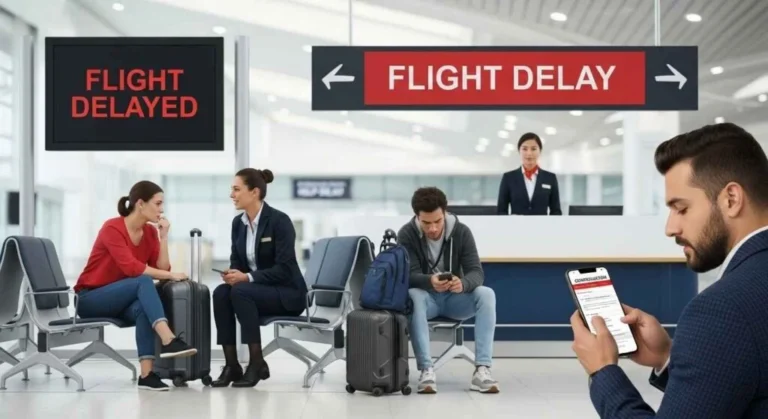
By the early 2000s, the “Non-Refundable” model became the global standard for economy-class travel. However, the Disruption Waves of the 2020s forced a regulatory reckoning. Governments realized that airlines were using the “Non-Refundable” label to withhold billions in capital during mass-cancellation events. This led to the 2024–2026 U.S. DOT mandates for “Automatic Refunds,” which stipulate that if a flight is significantly delayed or canceled, the airline must return the cash without the passenger having to “beg” for it. Despite this, the implementation remains uneven, as airlines have developed sophisticated “Voucher-First” interfaces designed to trick passengers into accepting a flight credit instead of the cash they are legally owed.
Conceptual Frameworks and Mental Models
1. The “Involuntary Trigger” Model
This is the most potent framework for capital recovery.
-
The Logic: If the airline changes the “Contract” (the schedule) by more than a defined threshold (usually 3 hours for domestic, 6 hours for international), the fare rules are rendered void.
-
The Strategy: Even if you have a non-refundable ticket, if the airline changes your flight time significantly, you have the right to decline the change and demand a full refund.
-
Limit: If you accept the new flight or wait until after the flight has departed, you lose the “Involuntary” leverage.
2. The “Merchant of Record” (MoR) Framework
This determines who actually has your money.
-
The Logic: If you book via an Online Travel Agency (OTA), the OTA is often the MoR. The airline cannot refund you because they were never paid by you; they were paid by the agency.
-
The Strategy: Always check your credit card statement. If it says “Expedia” or “CheapFlights,” your refund path is through them. If it says “Delta” or “Lufthansa,” you go to the airline.
3. The “Fare Basis” Liquidity Gradient
Treating the ticket as a tiered financial asset.
-
The Logic: “Basic Economy” has 0% liquidity. “Main Cabin” has 50% liquidity (usually refundable as a credit). “Full Flex” has 100% liquidity.
-
The Strategy: Align the “Liquidity Tier” with the “Certainty” of the trip. If the trip is 90% likely to happen, buy Main Cabin. If it’s a 50/50 chance, only “Full Flex” is an appropriate use of capital.
Key Categories of Refund Scenarios and Trade-offs
Navigating the recovery of funds requires matching the “Failure Mode” to the correct category of remedy.
| Category | Primary Benefit | Significant Trade-off | Success Rate |
| Statutory Refund | Full cash return mandated by law. | Only applies to airline-initiated changes. | 95%+ |
| 24-Hour Grace Period | Total refund for any reason. | Requires booking 7+ days in advance. | 100% |
| “Fully Refundable” Fare | Total flexibility and peace of mind. | 40-100% price premium upfront. | 100% |
| Schedule-Change Arbitrage | Uses minor airline errors to trigger refunds. | Requires constant monitoring of PNR. | 60-70% |
| Travel Insurance Claim | Covers “unforeseen” cancellations. | High documentation burden; many exclusions. | 40-50% |
| Compassion Waiver | Refund for death or medical emergency. | Requires sensitive documentation (death certs). | 30-40% |
Detailed Real-World Scenarios and Decision Logic
The “Voucher-Opt-In” Trap
An airline cancels your flight and sends an automated text: “We are sorry. Click here to accept your $250 travel credit.”
-
The Mistake: Clicking the link. In many jurisdictions, accepting a voucher is a “Voluntary Exchange” that waives your right to a cash refund.
-
The Decision: Ignore the link. Go to the airline’s website, find the “Refund Request” form, and cite the “Involuntary Cancellation” regulation.
The “Schedule Creep” Maneuver
You bought a non-refundable ticket for a wedding that was subsequently moved. You cannot go, but you don’t want to lose $600.
-
The Strategy: Do not cancel the ticket immediately. Monitor the flight weekly. If the airline changes the departure time by even 61 minutes, check their “Contract of Carriage.”
-
The Result: Often, a 60-90 minute change is enough to allow a “No-Fee Change” or, with slightly more significant changes, a full refund. Patience is a financial tool.
Planning, Cost, and Resource Dynamics
The “Cost” of avoiding refund issues is often a “Time-Capital” trade-off.
| Resource | Value in the Refund Process | Risk of Ignoring |
| Lead Time | Allows for “24-hour” safety net. | Locked into “Basic Economy” traps. |
| Direct Booking | Simplifies “Merchant of Record” path. | The “Middleman Loop” (weeks of waiting). |
| Fare Class Audit | Identifies “Liquidity” of the ticket. | Unexpected $200 “Change Fees.” |
| Regulatory Knowledge | Acts as the “Final Authority” in disputes. | Accepting a useless voucher. |
The “Refund Success” Range Table:
-
Direct Booking + Flex Fare: 100% success; < 48 hours.
-
Direct Booking + Standard Economy: 100% credit; 5-10% cash (on schedule change).
-
OTA Booking + Basic Economy: < 5% success; 30+ days of effort.
Tools, Strategies, and Support Systems
To systematically eliminate refund friction, travelers must utilize a “Recovery Tech Stack”:
-
ITA Matrix (PowerSearch): Allows you to see the “Raw Fare Rules” before you buy, highlighting phrases like “NON-REF/CHG FEE.”
-
ExpertFlyer (Flight Alerts): Set an alert for “Schedule Changes.” The moment the airline moves your flight, you get an email, giving you the jump on requesting a refund before the “Automated Rebooking” locks you in.
-
DOT Complaint Portal: The “Nuclear Option.” If an airline denies a legally mandated refund, a DOT complaint forces an “Executive Office” review of your case.
-
Privacy.com / Virtual Cards: Useful for OTA bookings. If they try to charge a “Refund Processing Fee,” you can pause the card, ensuring the refund goes back without a secondary tax.
-
Timestamped Screenshots: In any refund dispute, the “Truth” is whatever was on the screen at 3:14 PM when the flight was marked “Cancelled.”
-
“Double-Ticketing” Strategy: If a flight is delayed 5+ hours, book a new flight on a different airline before canceling the first. This ensures you aren’t stranded while fighting for the original refund.
Risk Landscape and Failure Modes
The “Refund Risk” is rarely a single event; it is a “Taxonomy of Friction.”
-
The “Ancillary Orphan” Mode: You get a refund for the flight, but the $100 you spent on “Extra Legroom” or “Pre-paid Bags” is lost. Ancillaries often require a separate manual refund request.
-
The “Chargeback Prematurity” Mode: Filing a credit card chargeback before the airline has officially denied a refund. This can lead to the airline “Freezing” the PNR, making it impossible to even use the ticket for a credit later.
-
The “Point-of-Sale” (POS) Conflict: If you bought a ticket in Euros on a French site but live in the U.S., the refund must be processed in the original currency, often leading to “Exchange Rate Leakage” and bank fees that eat 5-10% of the value.
Governance, Maintenance, and Long-Term Adaptation
Effective capital preservation in travel requires a “Post-Purchase Review” cycle.
-
The “72-Hour Audit”: Re-read your confirmation email 72 hours after booking. Verify that the “Ticket Status” is “Issued/OK.” If it stays “Pending,” a refund is impossible because a ticket was never technically created.
-
The “Voucher Ledger”: If you must accept a credit, treat it like a bank account. Track the expiration date and the “Owner” (some credits are non-transferable). 20% of airline credits go unredeemed, representing a pure profit for the carrier.
-
Adjustment Triggers: If an airline merges or goes bankrupt (as seen with smaller carriers in the 2024-2025 cycle), the “Refund” path immediately shifts to a “Creditor Claim.” Speed is the only survival metric here.
Common Misconceptions and Oversimplifications
-
Myth: “Non-refundable means I get zero back.” Correction: You are always entitled to a refund of government taxes and airport fees (like the $5.60 TSA fee) if you don’t fly, regardless of the fare.
-
Myth: “The agent said it’s non-refundable, so that’s final.” Correction: Phone agents are often trained on “Front-line Policies,” not the “Contract of Carriage” or Federal Law. A “No” from an agent is often just a “No” from that specific person.
-
Myth: “I have travel insurance, so I’m safe.” Correction: Insurance usually only pays out for “Named Perils” (death, jury duty). It does not cover “Change of Heart” or “Work Conflict” unless you bought the expensive “Cancel for Any Reason” (CFAR) rider.
-
Myth: “The 24-hour rule is based on the time zone of my destination.” Correction: It is almost always based on the “Point of Sale” or the airline’s headquarters time zone. Always act within 20 hours to be safe.
Ethical and Contextual Considerations
While the focus here is on how to avoid ticket refund issues to protect personal or corporate capital, there is a broader context. Airlines operate on thin margins and high fixed costs. The “Non-Refundable” system is what allows for $49 cross-country flights. However, the ethical line is crossed when carriers use “Dark Patterns,” manipulative user interfaces to hide cash refund options during times of crisis. A savvy traveler isn’t “gaming” the system; they are simply holding a multi-billion dollar corporation to the “Contract” they both signed.
Conclusion
The successful recovery of funds from an airline is an exercise in “Contractual Literacy.” As we have explored, the system is designed to favor the carrier’s liquidity, but the law and the “Involuntary Trigger” model provide a powerful counterweight. By booking direct, monitoring schedule changes with digital tools, and rigorously documenting every “Operational Failure” of the airline, the traveler can turn a potential loss into a reclaimed asset. The ultimate authority in a refund dispute is not the gate agent or the chatbot; it is the person who holds the timestamped proof and the specific clause from the Contract of Carriage. In the 2026 aviation market, capital protection is the highest form of travel mastery.