How to Manage Airline Overbooking: A Strategic 2026 Manual
The operational logic of the modern aviation industry is predicated on a statistical necessity known as overbooking. To the casual observer, the practice of selling more seats than physically exist on an airframe appears to be a clerical error or a manifestation of corporate avarice. However, within the sophisticated architecture of revenue management, overbooking is a calculated response to “spoilage,” the financial loss incurred when a seat flies empty due to “no-show” passengers. For the individual traveler or the corporate logistical planner, this systemic reality introduces a layer of volatility that can disrupt mission-critical timelines and personal obligations.
The management of an overbooked flight is essentially a high-stakes negotiation between the carrier’s algorithmic efficiency and the passenger’s contractual rights. As airlines move toward leaner operational margins, the “buffer” of empty seats has largely evaporated, making the phenomenon of “bumping” or Involuntary Denied Boarding (IDB) a more frequent operational friction point. Navigating this environment requires a departure from reactive frustration and an adoption of a technical, rights-based methodology. It is no longer sufficient to merely possess a ticket; one must understand the hierarchy of boarding priority and the regulatory frameworks that govern compensation.
This editorial exploration establishes a definitive framework for addressing the complexities of overcapacity. By deconstructing the systemic evolution of airline yield management and providing the mental models necessary to evaluate “Involuntary Risk,” this resource serves as a cornerstone for those who require absolute operational continuity. We will analyze the specific levers of power a passenger holds during an overbooking event, moving beyond surface-level advice to examine the structural and economic foundations of “Denied Boarding” protocols.
Understanding “how to manage airline overbooking.”
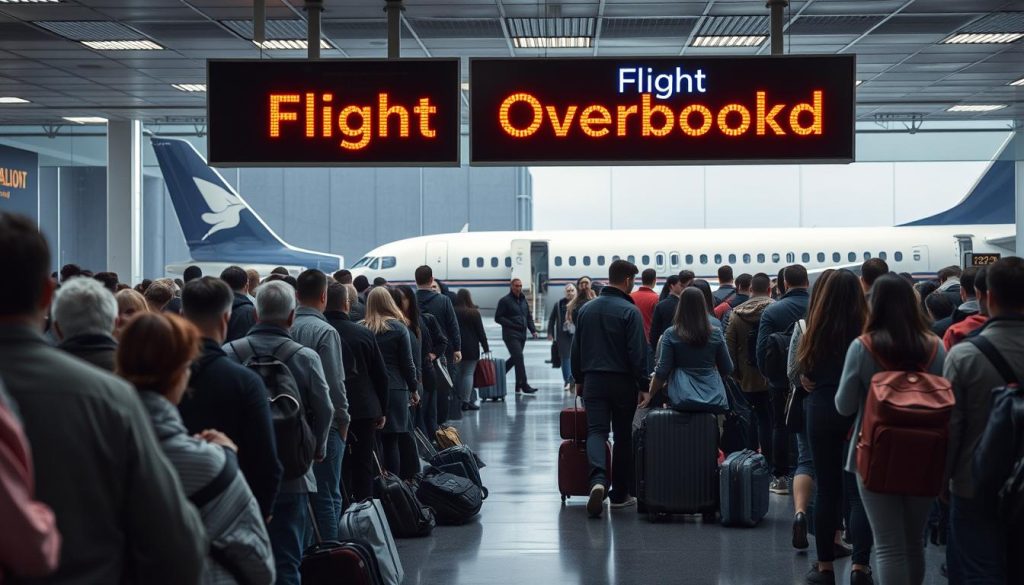
To effectively master how to manage airline overbooking, one must first recognize that the airline’s “Contract of Carriage” does not guarantee a seat on a specific flight; it guarantees transportation to a destination. This legal nuance is the pivot upon which all overbooking disputes turn. In a professional logistical context, managing this situation is a process of “Contractual Enforcement.” The objective is to shift from being a “logistical unit” to be moved at the airline’s discretion, to a “contractual partner” whose time and presence have a legally mandated price.
Multi-Perspective Evaluation
From a technical perspective, overbooking management involves understanding the “Boarding Priority” algorithm. Airlines do not choose who to bump at random; they use a hierarchy based on fare class, loyalty tier, check-in time, and the price paid for the ticket. From a behavioral perspective, it requires a “Negotiated Voluntary” stance. Often, the best way to manage a situation is to volunteer for a later flight, but only when the “Opportunity Cost” of the delay is lower than the value of the compensation offered.
The Risk of Oversimplification
Many travelers oversimplify overbooking as a binary event: you get on the plane, or you don’t. This ignores the “Secondary Recovery” phase. If you are involuntarily bumped, the airline is often legally required to pay you a multiple of your fare in cash, not just vouchers. A true professional-grade guide must deconstruct these “Compulsory Compensation” tiers, ensuring that the traveler does not accidentally waive their rights by accepting a low-value “voluntary” voucher when they are actually entitled to a high-value “involuntary” cash settlement.
Contextual Background: The Mathematical Evolution of Overcapacity
The practice of overbooking is a legacy of the Early Jet Age (1950s–1960s), when airlines realized that a significant percentage of passengers—sometimes as high as 15% simply failed to show up for their flights. Because a seat is a “perishable good,” a flight that departs with an empty seat represents revenue that can never be recovered. The first overbooking models were crude, based on simple historical averages.
The Deregulation and Mainframe Era (1970s–1990s) saw the introduction of sophisticated probability density functions. Airlines began to use “No-Show” rates specific to every route, day of the week, and even time of day. A Monday morning flight from New York to London has a very different no-show profile than a Friday evening flight to a vacation destination. This era also saw the birth of the “Voluntary Denied Boarding” (VDB) process, popularized after high-profile legal challenges forced airlines to ask for volunteers before forcing people off.
Today, we are in the Algorithmic Real-Time Era. Using New Distribution Capability (NDC) and modern data analytics, airlines can predict no-show rates with startling accuracy. However, “Operational Surprises” such as a cancelled flight on another route or a sudden swap to a smaller aircraft (equipment down-gauge) still cause overbooking events that the algorithms cannot solve. In these moments, the airline transitions from mathematical prediction to “Auction Theory,” attempting to find the lowest price a passenger will accept to stay behind.
Conceptual Frameworks and Mental Models
To evaluate the strength of a position during an overbooking crisis, professionals apply several rigorous mental models.
1. The “Boarding Hierarchy” Model
This framework posits that every seat has a “Protection Score” based on the traveler’s value to the airline.
-
The Logic: A full-fare Business Class traveler with top-tier loyalty status has a near-zero probability of being involuntarily bumped. A Basic Economy traveler with no loyalty status and a low-fare “bucket” (like ‘O’ or ‘Q’ class) is the first candidate for offloading.
-
The Limit: In rare cases of “Weight and Balance” issues or “Crew Deadheading” (moving pilots to another city), even premium passengers can be affected.
2. The “Auction Value” Framework
This treats the gate area as a marketplace for time.
-
The Logic: The first voucher offer (e.g., $200) is the “Floor.” As the departure time approaches and the airline remains overbooked, the offer will escalate. The “Value-at-Risk” for the airline includes potential legal fines and the cost of an involuntary bump, which can be up to $1,550 in the U.S.
-
The Limit: If too many people volunteer at the lower price, the auction ends early, and the late-comer gets nothing.
3. The “Recovery Velocity” Mental Model
This model prioritizes the speed at which a traveler can be rerouted after being bumped.
-
The Logic: Before volunteering, one must check the “Availability Gradient.” If the next flight isn’t for 24 hours, the $500 voucher may not cover the cost of a hotel and lost time. If the next flight is in 2 hours, the voucher represents a high “Hourly Return on Investment.”
Key Categories of Denied Boarding and Trade-offs
Identifying the type of overbooking event is essential for determining the appropriate response.
| Category | Definition | Primary Compensation | Strategic Trade-off |
| Voluntary (VDB) | The passenger agrees to stay. | Vouchers, upgrades, cash. | High control; potential for “Low-Ball” offers. |
| Involuntary (IDB) | The passenger is forced off. | Legally mandated cash. | No control; highest cash payout; high stress. |
| Equipment Swap | A smaller plane was used. | Partial refund + re-booking. | Unavoidable; affects even high-tier flyers. |
| Weight/Balance | Cargo/Fuel constraints. | Varies by carrier contract. | Often non-compensable under “Safety” clauses. |
| Crew/Deadhead | Moving staff for the mission. | High negotiation leverage. | Controversial; high “Bad PR” for the airline. |
| Connection Fail | The inbound flight is late. | “Duty of Care” (hotel/meals). | Lowest compensation; airline blames “Logistics.” |
Detailed Real-World Scenarios and Decision Logic
The “Escalating Voucher”
The gate agent offers $400 for three volunteers on a flight to Chicago. No one moves. Ten minutes later, they offered $800.
-
Decision Logic: The traveler checks their schedule. They are heading home and have no meetings. They wait for the “Final Offer.”
-
The Action: The offer hits $1,200. The traveler volunteers but only on the condition that they are re-booked on a “Confirmed” seat (not standby) on the next flight and given a lounge pass.
-
Outcome: A 3-hour delay results in a $1,200 travel credit and a physical upgrade on the next leg.
The “Involuntary Resistance”
The airline announces that because no one volunteered, four passengers will be bumped, including the traveler.
-
Decision Logic: This is an IDB event. The traveler knows that in the U.S., if the delay is over 2 hours, they are entitled to 400% of their one-way fare, up to $1,550, in cash/check—not just vouchers.
-
The Action: The traveler politely refuses the voucher at the desk and requests the “Written Statement of Rights” and a cash settlement on the spot.
-
Outcome: The traveler secures the maximum cash payout and a re-booked flight for the following morning.
Planning, Cost, and Resource Dynamics
Managing overbooking involves “Resource Arbitrage”—trading your time for the airline’s capital.
| Cost Variable | Estimated Impact | Reason for Variability |
| Cash Payout (IDB) | Up to $1,550 | Dictated by DOT or EU261 regulations. |
| Voucher Value (VDB) | $200 – $2,500 | Varies by the “Desperation Level” of the gate agent. |
| Opportunity Cost | $100 – $500 / hr | The value of the traveler’s lost professional time. |
| Recovery Friction | High | The labor of re-booking and managing luggage. |
The “Involuntary Risk” Table:
-
Low Risk: Full-fare (Y/J/F) tickets; High Loyalty Status; Checked in 24 hours early.
-
Medium Risk: Mid-tier fare; Late check-in; No loyalty status.
-
High Risk: Basic Economy; Last to check in; Discounted “O/Q” fare buckets.
Tools, Strategies, and Support Systems
To master the situation, one must utilize a “Negotiation Stack”:
-
DOT Air Consumer Dashboard: A real-time reference for what each airline is legally required to provide for delays and bumping.
-
ExpertFlyer/GDS Visualizers: Checking the “Load Factor” of your flight 24 hours in advance to see if it is “oversold” (denoted by negative numbers in the fare buckets).
-
The “Lounge Concierge” Bypass: Using the lounge agent to handle re-booking if you are a member; they are less stressed than gate agents and have more “Override Power.”
-
Mobile App Check-in (The 24-Hour Rule): Check-in time is often used as a tie-breaker for bumping. The earlier you check in, the safer you are.
-
Seat Selection Persistence: Having a confirmed seat number is a significant deterrent to being bumped compared to those with “Seat assigned at gate” status.
-
Regulation EU261 Reference: For any flight departing the EU or on an EU carrier, this is the “Golden Rule” of compensation.
-
Social Media DMs: Using the airline’s Twitter/X team to document the refusal of cash compensation in real time.
Risk Landscape and Failure Modes
The primary risk in overbooking is “Contractual Waiver.”
-
The “Voucher Trap”: Accepting a $300 voucher for an involuntary bump, which cancels your right to the $1,550 cash payout. Once you sign for the voucher, you waive your regulatory rights.
-
The “Luggage Separation” Failure: Being bumped while your checked bags fly to the destination. The risk of theft or loss increases significantly.
-
The “Standby” Loophole: Volunteering for a later flight only to be told the next flight is “Full” and you are on “Standby.” You have traded a confirmed seat for a hope, which is a tactical failure.
Governance, Maintenance, and Long-Term Adaptation
A robust strategy requires a “Post-Event Audit.”
-
The 48-Hour Review: Ensuring that the “Electronic Travel Credit” actually appeared in your account. Many airline systems fail to sync the gate agent’s manual entry.
-
DOT Complaints: If an airline refuses to pay the mandated IDB cash, filing a formal complaint is the only way to trigger a regulatory review.
-
Loyalty Assessment: If a carrier consistently overbooks your primary route and handles it poorly, it should be removed from your “Preferred Carrier” list.
Measurement, Tracking, and Evaluation
How do we quantify success in an overbooking event?
-
Effective Hourly Rate (EHR): (Total Compensation / Total Delay Hours). A success is an EHR higher than your professional billing rate.
-
Asset Liquidity: Is the compensation in “Cash” (high liquidity) or “Airline-Only Vouchers” (low liquidity)?
-
Mission Continuity Score: Did the delay cause a “Secondary Failure” (missed wedding, lost contract)? If yes, the management was a failure regardless of the compensation.
-
Documentation Examples: Keeping a photo of the “Denied Boarding” sign at the gate and a recording (where legal) of the agent’s offer.
Common Misconceptions and Oversimplifications
-
Myth: “They have to give me a hotel.”
Correction: For a voluntary bump, everything is negotiable. For an involuntary bump, they must provide “Duty of Care” (meals/comms), but hotel rules vary by carrier. -
Myth: “I can’t be bumped if I have a boarding pass.”
Correction: A boarding pass is a license to wait, not a guarantee of flight. IDB happens after boarding passes are issued. -
Myth: “Vouchers are just as good as cash.”
Correction: Vouchers expire, have “blackout dates,” and cannot be used for taxes/fees on some carriers. Cash is absolute. -
Myth: “If I’m late to the gate, they can bump me for free.”
Correction: Yes. If you miss the “15-minute boarding cutoff,” it is a “No-Show,” not an IDB. You get zero compensation. -
Myth: “Overbooking is illegal.”
Correction: It is perfectly legal and encouraged by DOT as it keeps overall ticket prices lower by ensuring planes fly full. -
Myth: “The agent is being mean to me.”
Correction: The agent is usually following a computer-generated list. Personal appeals rarely work; “Contractual Appeals” do.
Conclusion
The management of air transit in an era of overcapacity is a study in leverage. As we have seen, managing airline overbooking is not about avoiding the event, but about controlling the outcome. By understanding the “Boarding Hierarchy,” leveraging “Auction Theory,” and insisting on regulatory cash over corporate vouchers, the traveler can turn a logistical failure into a strategic gain. The future of travel belongs to those who view the “Contract of Carriage” not as a set of rules they must follow, but as a set of protections they must enforce.